
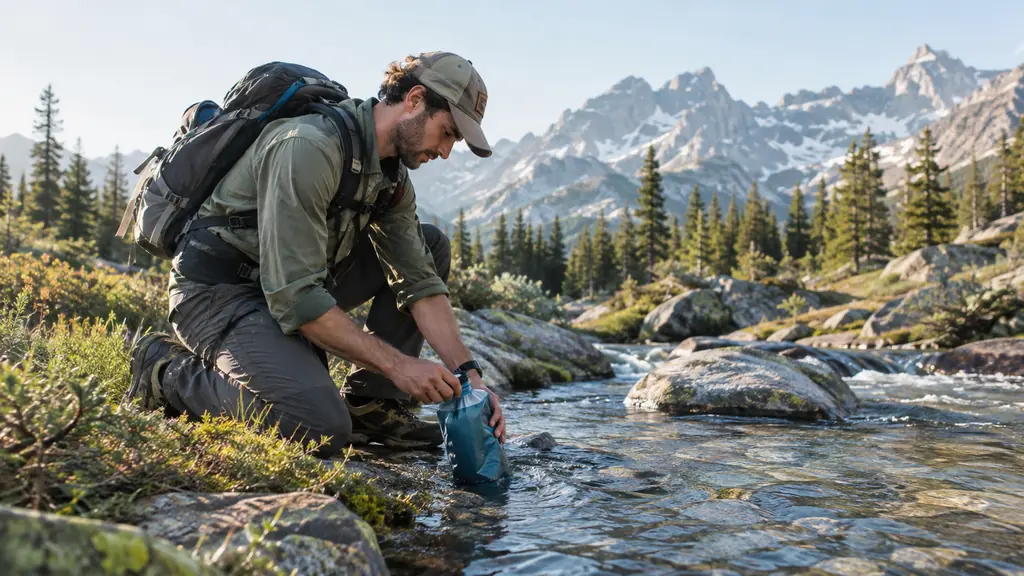
The first time I filled the Sawyer Mini, I was standing in a creek crossing on the way to Sawtooth Lake and I timed it out of habit. Twenty seconds to fill the pouch, about a minute to squeeze it into my bottle. That was it. No pumping, no waiting, no iodine taste. I have carried this filter on every hike since, and months later it still does the same job it did that first afternoon.
I am Nora, a physical therapy assistant from Boise. I hike the foothills most weeknights and the Sawtooths most weekends, and I have learned the hard way that a water filter is the piece of gear I refuse to leave behind. The Sawyer Mini is the one I currently carry, and this review covers a full season of real use: creek crossings, alpine lakes, a few questionable puddles, and one very long day where I filtered four liters for my husband Mark and myself.
The Quick Verdict
The Sawyer Mini is the lightest, simplest way to drink from the backcountry, and it filters fast enough that I actually use it instead of rationing water. It is not the fastest filter for group trips, and the pouch takes some care, but for a solo hiker or a couple it is hard to beat.
Amazon Check Today's Price →The filter I reach for every single hike
After a full season of Idaho trails, the Sawyer Mini is still the first thing in my pack. Check today's price on Amazon and see why it earned a permanent spot in my gear.
Amazon Check Today's Price on Amazon →How I've Used It
I bought the Sawyer Mini in early spring, before the snow melted off the high trails. My first real test was a 9-mile loop in the Boise foothills where the only water source was a muddy stock pond. I filled the pouch, let the sediment settle for a minute, and squeezed. The water came out clear and cold, and I did not get sick. That is the baseline every filter has to meet, and the Sawyer Mini met it on the first try.
Since then I have used it on at least twenty hikes. I have filtered from alpine lakes above 8,000 feet, from fast-moving creeks, and from a faucet at a trailhead when I forgot to fill my bottle at home. I have carried it in my hip belt pocket, in the lid of my pack, and once, briefly, in the pocket of my rain jacket. It has been dropped on granite, stuffed into a wet pack, and left in the car overnight in freezing temperatures. I thawed it before use, and it still works.
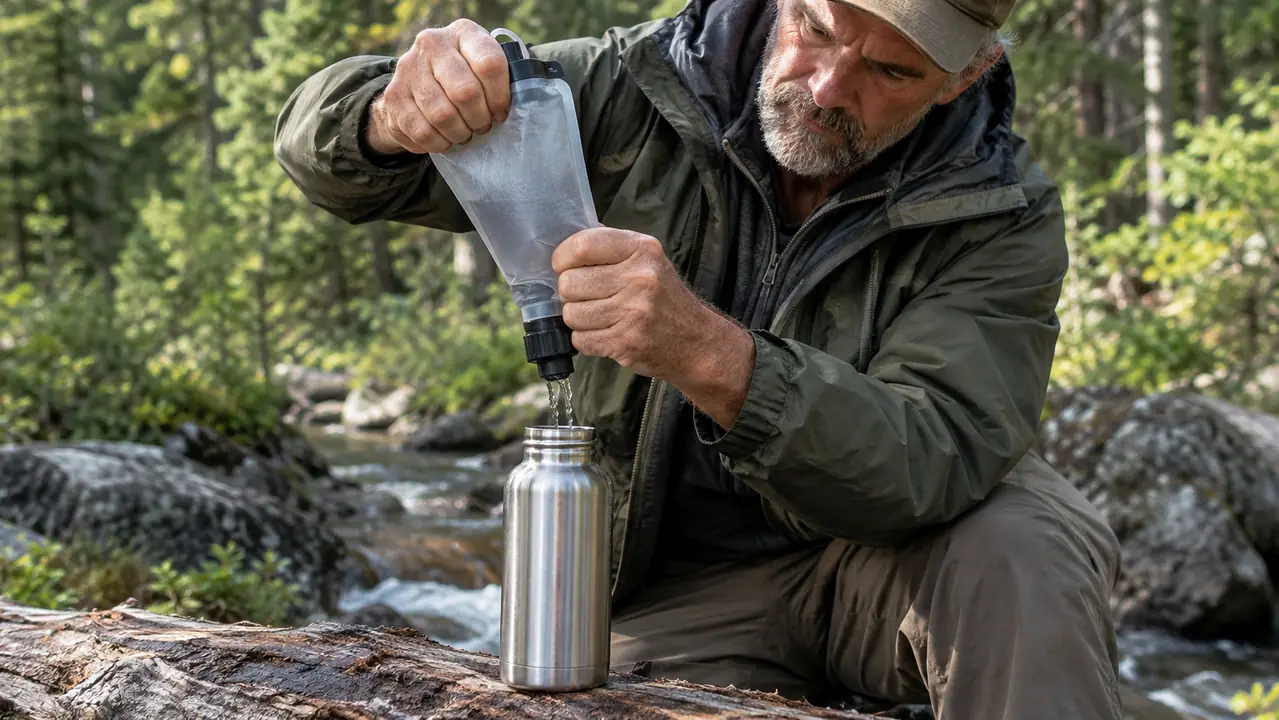
The routine is simple. Fill the pouch, screw on the filter, squeeze. The flow rate is good for the first liter and slows a little after that, but a quick backflush at home brings it right back. I backflush after every trip, and I have never had a clog I could not clear.
One morning in late June, on a 14-mile out-and-back to Alpine Lake, I filtered three liters before the sun cleared the ridge. My husband Mark drank two of them and I drank one, and neither of us felt a twinge. On the way down I topped off again from a snowmelt creek. That day alone the filter paid for itself in what I did not have to carry.
What Makes the Sawyer Mini Different
The Sawyer Mini is a hollow fiber membrane filter, which means it physically strains out bacteria and protozoa rather than killing them with chemicals. The filter is rated to 0.1 micron absolute, which is smaller than most bacteria and all of the common protozoa like giardia and cryptosporidium. That rating is the whole story. It is why the water tastes like water and not like iodine, and it is why I trust it on alpine lakes where the water looks perfect but might not be.
Sawyer rates the Mini for 100,000 gallons, which is a number I did not believe until I read the manual twice. I will never personally verify it, but I have put maybe 60 gallons through mine this season and the flow rate has not changed in any meaningful way. For comparison, a typical weekend hiker might filter 10 gallons a year. The rated lifespan is effectively a lifetime for most people.
The whole system weighs 2 ounces. That is lighter than my phone, lighter than a single energy bar, and light enough that I stopped noticing it in my pack after the first mile. The filter itself is smaller than my thumb. It screws onto the included pouch, onto standard plastic water bottles, and onto the hydration bladder I use on longer days. That versatility is the reason I chose it over a heavier pump filter.
I have also used the Mini on a few overnight trips where I needed to refill from a lake that had livestock grazing upstream. The 0.1 micron rating does not remove viruses, which is true of most filters in this class, but it does catch the bacteria and protozoa that are the real concern in the backcountry. I checked the Sawyer website before my first trip and confirmed that the Mini is not rated for viruses, so I planned around it. For the water sources I use in Idaho, that tradeoff is acceptable.
Performance Over a Full Season
The most important thing I can tell you is that the Sawyer Mini has never made me sick. I have drunk from sources I would not have touched without a filter, including that stock pond and a slow-moving creek below a beaver dam. I filtered, I drank, and I finished every hike feeling fine. That is the job, and it has done it every single time.
The flow rate is the tradeoff. A fresh filter will do about a liter in a minute and a half with a good squeeze. That is fast enough for me, but it is noticeably slower than a full-size Sawyer Squeeze or a pump filter. On a group trip where I was filtering for four people, I found myself wishing for the bigger filter. For just me and Mark, the Mini is fine. I fill my bottle while he sets up camp, and we are both ready to go.
Cold water slows the flow. On a 40-degree morning in the Sawtooths, the filter was noticeably slower than it was in the summer. It still worked, just with more patience. I learned to fill the pouch before I needed water, not after, and to keep the filter in my jacket pocket when I was not using it.
The only time I came close to a clog was after I let a pouch of cloudy water sit overnight. The next morning the squeeze was slow, and I thought I had ruined it. A two-minute backflush with the syringe cleared it completely. Since then I have tried to filter clear water when I can, and I have not had a repeat.
One more note on flow: the included pouch has a wide mouth, which makes filling easy, but the pouch is soft and hard to hold with one hand. I usually wedge it between my knees while I squeeze. That sounds awkward, and it is, but it works. If I were buying again, I would probably also pick up a second pouch so I could filter while the first one was drying.
I have drunk from sources I would not have touched without a filter, and I finished every hike feeling fine. That is the job, and it has done it every single time.

The Pouch and the Practical Details
The included pouch is the weakest part of the system. It is a 32-ounce collapsible bag with a wide mouth for filling, and it works, but it is not built like the filter. The seam where the cap attaches is the first thing to stress, and I have read enough reports of pouches splitting after heavy use to treat mine gently. I fill it by holding it under the water rather than dunking it, and I squeeze with both hands evenly. Mine is still intact after a season, but I would not be surprised to replace it eventually.
The good news is that the pouch is not the only way to use the filter. The Sawyer Mini screws directly onto standard plastic water bottles, which means I can fill a bottle from a stream, screw on the filter, and drink. I have also used it inline with a hydration bladder, which turns the whole system into a gravity filter. Both of those options work well and both are cheaper than replacing the pouch.
Backflushing is simple. The kit includes a small syringe that pushes clean water backward through the filter. I do it after every trip, and it takes about two minutes. The syringe is small and easy to lose, so I keep it in the same stuff sack as the filter. Sawyer also sells a coupling that lets you backflush with a standard water bottle, which I have not needed but appreciate knowing about.
One more detail: the threads on the filter are the same size as the threads on a lot of plastic soda bottles, so in a pinch I can use a bottle I already have. I tested this once with a bottle I bought at a gas station, and it worked. That flexibility matters when the included pouch is not convenient.
One thing I want to flag: the filter itself can freeze if it is left in a car overnight in winter. Sawyer is clear about this, and the instructions say to keep it from freezing. I left mine in the car once on a cold night and spent the next morning worried I had cracked the hollow fibers. It thawed and worked fine, but I do not risk it anymore. In cold months I bring the filter inside and keep the pouch in the car.
What I Liked
- Filters to 0.1 micron, so I trust it on lakes and creeks
- Weighs 2 ounces, easy to forget in a pack
- Screws onto standard bottles and hydration bladders
- Simple to backflush with the included syringe
- Rated for 100,000 gallons, effectively a lifetime
Where It Falls Short
- Flow rate slows in cold water
- Included pouch is the weak point and may need replacing
- Not ideal for filtering for more than two people
- Small syringe is easy to lose
Who This Is For
The Sawyer Mini is for the hiker who wants to drink from the backcountry without carrying a heavy pump or waiting for chemical tablets. It is for the solo hiker who wants the lightest possible setup, the couple who wants one filter for both bottles, and the thru-hiker who wants a filter that will outlast the trail. It is also for the person who, like me, has stood at a beautiful alpine lake and wished they could drink from it. You can.
If you hike alone or with one other person and you do not mind a minute of squeezing per liter, this filter is probably all you need. I have used mine on weeknight foothill loops where the only water was a trickle, and on multi-day trips where I filtered every drop I drank. It has not let me down in either setting.
I also think the Mini is a good first filter for someone who has never used one. The learning curve is short, the price is reasonable, and the stakes are low if you decide you prefer a different style. You can always move up to the full-size Squeeze later. I know several hikers who started with the Mini and still carry it years later.
Who Should Skip It
Skip the Sawyer Mini if you regularly filter for more than two people. The flow rate is fine for one or two bottles, but it becomes a bottleneck on group trips. Skip it if you want the fastest possible filtering experience; the full-size Sawyer Squeeze is faster and easier to squeeze, at the cost of a few extra ounces. And skip it if you are the kind of person who will lose a small syringe or forget to backflush. The Mini rewards a little care, and it will last longer if you give it some.
I would also think twice if most of your water comes from silty, slow-moving sources. The Mini handles sediment better than I expected, but a prefilter or a settled pouch helps a lot. If you mostly filter from clear mountain streams, none of this will matter to you.
One more group to consider: people who filter from very silty water on a regular basis. The Mini will handle it, but you will backflush more often, and the pouch will pick up grit that is hard to rinse out. A bandana or a coffee filter used as a prefilter helps a lot. If that sounds like too much fuss, a filter with a built-in prefilter might serve you better.
Still the first thing in my pack
After months of real trail use, the Sawyer Mini has earned its place in my gear. If you want the same peace of mind on your next hike, check today's price on Amazon.
Amazon Check Today's Price on Amazon →