
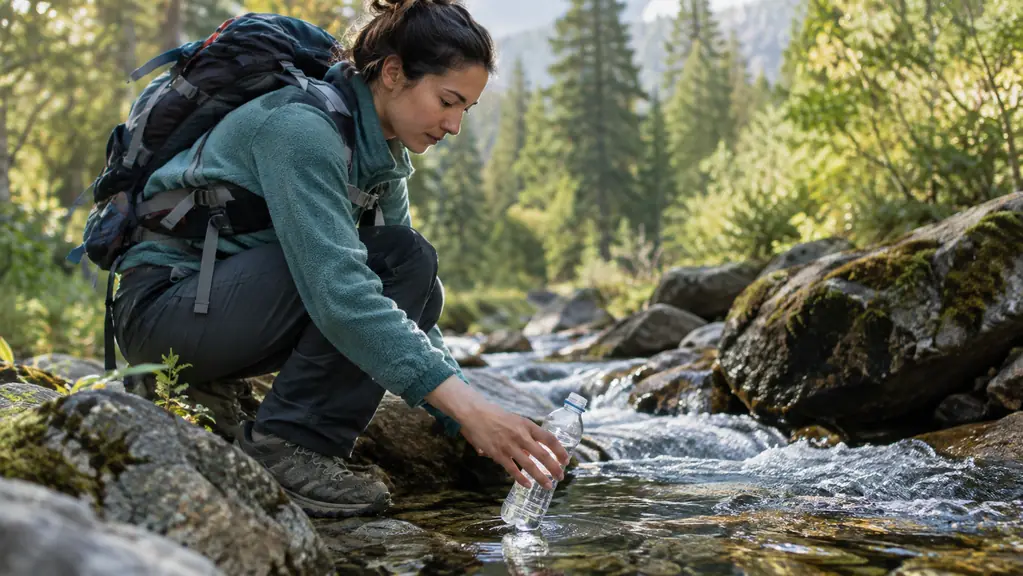
I've carried both the Sawyer Mini and the LifeStraw Peak on the same trails, sometimes in the same pack. The short answer: the Sawyer Mini is the better buy for most hikers, because it does more than a straw. It filters water into a bottle, a pot, or a hydration pack, and it comes with a syringe for cleaning. The LifeStraw Peak is simpler, but it only works as a straw. Here's how they compare after a season of drinking from the Boise foothills and the Sawtooths.
I'm not a gear snob. I'm a physical therapy assistant who hikes most weekends, and I need gear that works without fiddling. My husband Mark and I usually hike together, so I care about how much water we can carry and filter. I've used the Sawyer Mini on a week-long trip in the Sawtooths and the LifeStraw Peak on a long day hike. Both kept me from getting sick. The differences are in the details.
Why I Bought Both
I didn't plan to buy both. I started with the Sawyer Mini because it was the filter every long-distance hiker seemed to carry. Then Mark bought the LifeStraw Peak for a solo trip, and I kept borrowing it. After a few months, I realized I was comparing them without meaning to. So I decided to test them properly, side by side, on the same water.
How I Tested
I tested both filters on the same trails, using water from the same sources. That includes a clear mountain stream in the Sawtooths, a muddy puddle on a dry ridge, and the tap at a trailhead. I filtered into a bottle, into a pot for cooking, and straight into my mouth. I also let Mark use both, because he has strong opinions about gear. The first real test was in late June, on a Saturday morning at a stream crossing about four miles into the Sawtooth trail. The water was running fast and clear, and I filled the Sawyer bag first, then had Mark sip from the LifeStraw. We both drank the same water, which felt like the fairest way to compare them.
I kept track of how long it took to fill a 750 ml bottle, how easy it was to clean, and whether anything leaked or clogged. I also carried both in my day pack for a month to see which one I forgot I had. The Sawyer Mini is 2 oz and the LifeStraw Peak is 2 oz, so weight wasn't the deciding factor.
| Sawyer Mini | LifeStraw Peak | |
|---|---|---|
| Weight | 2 oz, about the same as a pack of cards | 2 oz, about the same |
| Flow rate | Steady, but you have to squeeze | Faster when you sip directly |
| Filter type | 0.1 micron hollow fiber | 0.1 micron hollow fiber |
| Included gear | Squeeze bag and cleaning syringe | The straw only |
| Cleaning | Syringe backflush is thorough | Cap backflush works, but it's fiddly |
| Best for | Filling a bottle or filtering for two | Solo sipping straight from the source |
The specs are close. Both are rated to filter a lot of water, and both remove the same size particles. The real difference is in how you use them. The Sawyer Mini is a tool you use to fill a container. The LifeStraw Peak is a tool you use to drink. That sounds obvious, but it changes everything about how you plan a day on the trail.
The Sawyer Mini does more than a straw, and the syringe keeps it flowing season after season.
What the Specs Mean
Both filters use a 0.1 micron hollow fiber membrane. That means they remove bacteria and protozoa, which are the things most likely to make you sick from untreated water. Neither removes viruses, but viruses are less of a concern in most North American backcountry. For what I do in the Sawtooths and the foothills, 0.1 micron is enough.
How They Handle Muddy Water
I tested both in a muddy puddle on a dry ridge. The Sawyer Mini with its squeeze bag handled it fine, though the water came out a little slow. The LifeStraw Peak also worked, but I had to be careful not to suck up silt from the bottom. Neither clogged completely, but the Sawyer Mini was easier to clean when it slowed down.
The Squeeze Bag vs the Straw
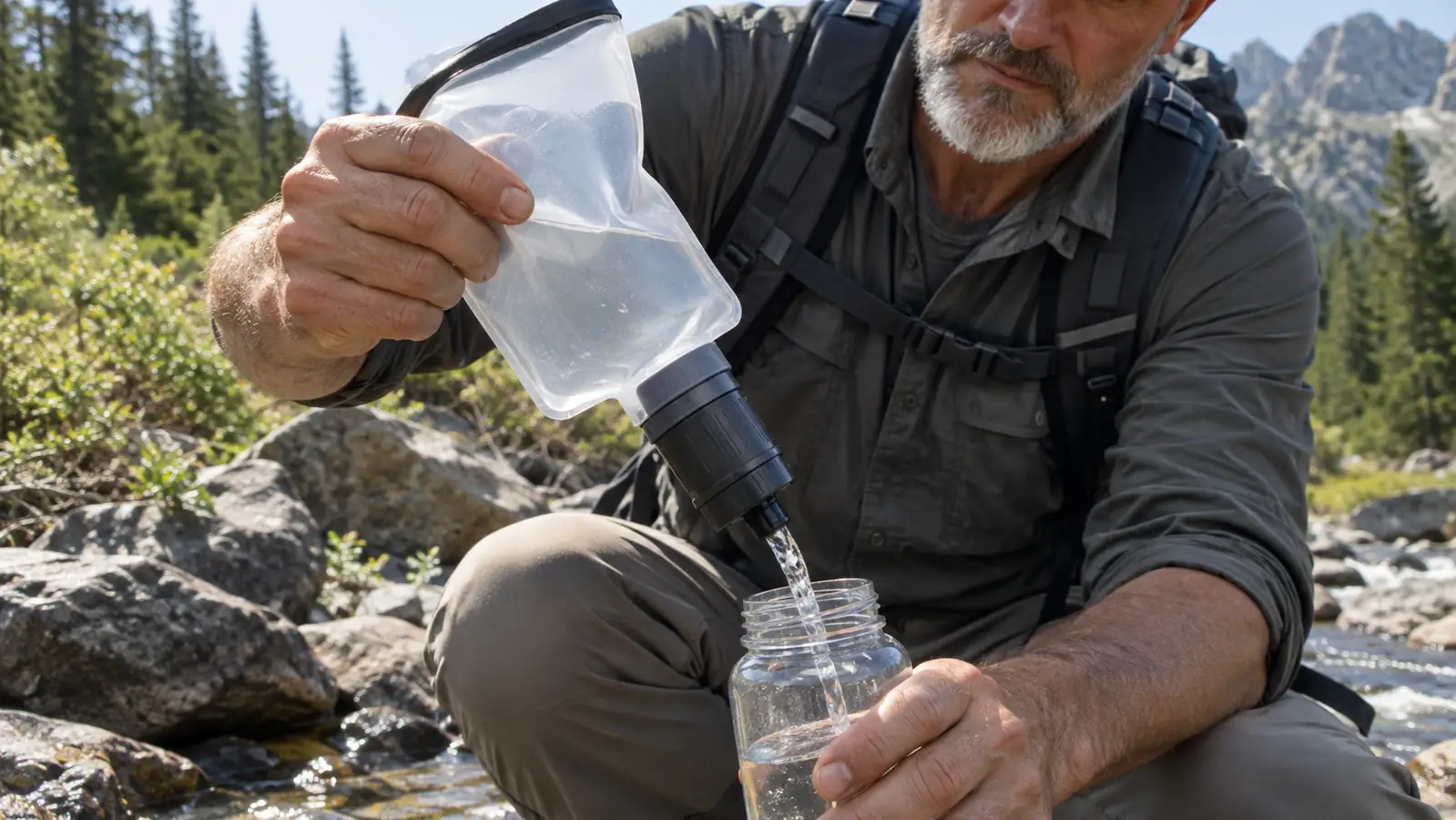
The Sawyer Mini comes with a squeeze bag. That bag is the reason the Mini can fill a bottle or a pot. The LifeStraw Peak is just a straw, so you have to drink straight from the source. If you want to cook dinner or fill a water bottle for later, the straw doesn't help. You'd need to carry a separate container and pour water through it, which is awkward. One night in the Sawtooths, I used the Sawyer to fill a two-liter pot for pasta and then a bottle for the morning. Mark stood there with the LifeStraw Peak in his hand and nothing to drink out of but the stream. That one evening settled the argument for us.
Using Them with a Hydration Pack
The Sawyer Mini can be attached inline to a hydration pack hose. I've done this on long day hikes. It adds a little resistance, but it means I can filter as I drink. The LifeStraw Peak can't do that. It's a straw, and that's it. If you like the idea of filtered water from your pack, the Sawyer Mini is the only one of these two that can do it.
Durability and Build
Both filters feel tough in the hand. The Sawyer Mini has a plastic body that's held up to being stuffed in my pack and dropped on rocks. The LifeStraw Peak has a similar feel, but the mouthpiece is a little more exposed. I've never broken either, but I'd trust the Sawyer Mini's design a bit more because the filter threads are protected when it's not in use.

Cleaning and Maintenance
Cleaning is where the Sawyer Mini pulls ahead. The included syringe lets me backflush the filter in less than a minute. I do it after every few trips, and the flow rate stays consistent. The LifeStraw Peak has a cap that you can use to backflush, but it's not as straightforward. You have to hold the straw under water and force it through the mouthpiece, which is awkward on the trail. After the muddy puddle test, the Sawyer slowed down noticeably. I backflushed it at the trailhead with the syringe and clean water, and it was back to normal in under a minute. The Peak never fully clogged, but I couldn't get its flow rate back to where it started without several tries.
Where the Sawyer Mini Wins
The Sawyer Mini's biggest advantage is that it's a system, not a straw. The included squeeze bag holds about a liter of dirty water. You fill it from a stream, screw on the filter, and squeeze the water into a bottle or a pot. That means you can filter water for both Mark and me without him having to carry a filter of his own. It also means I can fill my hydration bladder for a long day without stopping to drink from a stream.
The cleaning syringe is the other reason I reach for the Sawyer Mini. Every few trips, I backflush it with clean water and it flows like new. The LifeStraw Peak has a cap that does a rough backflush, but it's not as easy to do on the trail. The Sawyer Mini's syringe is small, cheap to replace, and it lives in the bag with the filter. I've had mine for two seasons and it still works.
Where the LifeStraw Peak Wins
The LifeStraw Peak wins on simplicity. You dip it in the water and sip. There's no bag to fill, no squeezing, no bottle to hold. If you're hiking solo and you're okay drinking from the source, it's the least fuss you can have. On a hot afternoon in the Sawtooths, being able to just lean down and drink without stopping to fiddle with a bag is a real advantage. That's the one day I reached for the Peak over the Sawyer: a dry stretch of trail above the treeline in August, where the only water was a shallow seep. I was thirsty, the sun was high, and the straw got me drinking in about five seconds. The Sawyer would have taken me a couple of minutes to set up.
The Peak also feels faster when you're actually drinking. The flow rate is noticeably better when you're sipping directly, which sounds like a small thing but matters when you're thirsty. And because there are no separate pieces, there's less to lose. I've dropped the Sawyer Mini's squeeze bag more than once. The Peak is one piece, so it's a little more foolproof.
What About Weight?
Weight is a tie, but it's worth saying why. The Sawyer Mini is 2 oz, and the LifeStraw Peak is 2 oz. The difference is that the Sawyer Mini's weight includes the syringe and the bag. The LifeStraw Peak is just the straw. So if you're counting every gram, the straw is lighter in practice, but not by much. For me, the extra ounce is worth the ability to fill a bottle.
Alternatives I Considered
If you're looking for a filter that does everything, the Sawyer Squeeze is a bigger version of the Mini with a faster flow. If you want something even lighter, the Katadyn BeFree is a squeeze bag with a different filter. But between the Mini and the Peak, the Mini is the one I'd pick for the way I hike. If you already own a squeeze bag, the Mini is an easy upgrade.
My pick for most hikers: the Sawyer Mini
It filters into a bottle, a pot, or a hydration pack, and the syringe keeps it flowing season after season. If you want one filter that does everything, this is it.
Amazon Check Today's Price on Amazon →Who Should Buy Which
Buy the Sawyer Mini if you hike with a partner, if you want to fill a bottle or a pot, or if you like the idea of a filter that can attach to a hydration pack. Buy the LifeStraw Peak if you're a solo hiker who wants the simplest possible way to drink from a stream and you don't mind not being able to fill a bottle. If you're not sure, start with the Sawyer Mini. It's more versatile, easier to clean, and it'll filter water for both you and a partner.
There's also the question of long-term value. The Sawyer Mini has a replaceable syringe and the filter itself is rated for a lot of water. The LifeStraw Peak is rated for a lot of water too, but you can't repair it if something breaks. For me, the Sawyer Mini feels like a better investment because it's a system you can maintain.
One more thing: if you're hiking with kids, the Sawyer Mini is easier to use. Kids can squeeze the bag, but they might struggle with a straw that requires suction. And if you're filtering water for cooking, the Sawyer Mini is the only one that makes sense.
Bottom Line
After a season of carrying both, I keep reaching for the Sawyer Mini. It does everything the LifeStraw Peak does, and then it does a few more things. The straw is simpler, but simpler isn't always better. When I'm hiking with Mark, when I need to cook dinner, or when I want to fill my hydration pack, the Sawyer Mini is the one that works. The LifeStraw Peak is a fine backup, but it's not the filter I'd choose first.
I'll keep the LifeStraw Peak in my car as a backup, and I'll keep the Sawyer Mini in my pack. That's the honest answer, in my opinion. If you can only buy one, get the Sawyer Mini. If you already have a Sawyer Mini, you don't really need the LifeStraw Peak.
Still deciding? Start with the Sawyer Mini
It's more versatile, easier to clean, and it'll filter water for both you and a partner. See today's price on Amazon and decide for yourself.
Amazon Check Today's Price on Amazon →