
The first time I filtered water on the trail, I did it wrong. I was on a long day hike in the Sawtooths, the kind where you run out of water two miles before the trailhead, and I had a squeeze filter I had never practiced with. I scooped from the wrong part of the stream, got the bag half full of silt, and spent the next ten minutes squeezing until my hands cramped. The water that came out was clear enough, but the whole process took twice as long as it should have. I have used a Sawyer squeeze filter on most of my hikes since then, and I have learned a few things that make it simple.
This guide is the system I actually use. It works for a quick refill on a lunch break, for a full day of hiking in the Boise foothills, and for multi-day trips where every liter counts. If you have a Sawyer MINI or a full-size Sawyer Squeeze, the steps are the same. The details are what change.
The filter I carry on every hike
The Sawyer MINI is the filter I have carried for years. It weighs almost nothing, fits in the pocket of my day pack, and has never let me down on a trail. If you are looking for a simple way to drink from streams and lakes without carrying all your water, this is the one I would start with.
Amazon Check Today's Price on Amazon →Step 1: Find the right water source
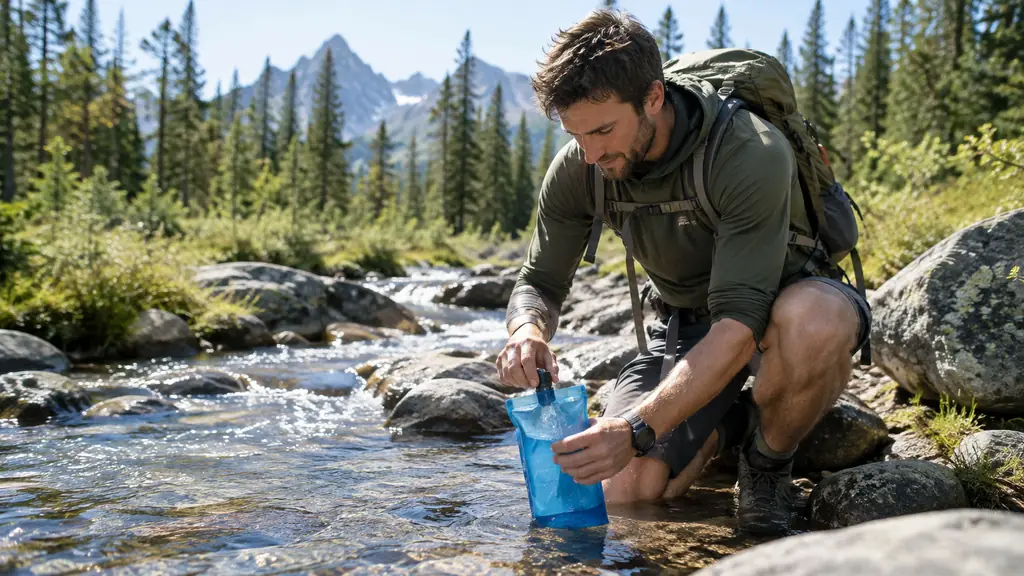
The filter does a lot of work, but it cannot fix a bad water source. I look for moving water first. A stream or a creek that is running clear beats a still pond every time. Moving water has less time to collect bacteria and sediment, and it is easier to fill from. If the only option is a lake or a puddle, I look for the deepest, clearest spot I can find, away from the shore and away from anything that looks like animal traffic. On a July trip in the Sawtooths, Mark and I stopped at a lake that looked perfect from the trail. Up close, the shore was lined with muddy tracks and the water had a green tinge. We walked ten minutes to where a creek fed the lake and filled there instead. The extra walk cost us time, but the filter stayed clear and the water tasted like nothing, which is exactly what I want. A rule of thumb I use: if I would not wade into it barefoot, I do not filter from it. That rule has saved me more than once.
I also pay attention to what is upstream. If I can see a campsite, a trail crossing, or a patch of mud where animals drink, I move upstream of it. A few minutes of walking can save you from filtering water that is full of silt or worse. On one trip in the Sawtooths, I walked an extra quarter mile to fill from a spot where the stream ran over clean rock instead of a muddy bank. It took less time than trying to filter the muddy water, and the filter stayed cleaner.
When I fill the pouch, I hold it upstream of my hand and let the current fill it. I do not dunk the whole bag. I keep the opening facing into the current and let the water flow in. This keeps the inside of the bag cleaner and keeps the outside from dragging along the bottom. If the water is shallow, I use my hand as a little scoop to guide the clearest water into the opening.
Step 2: Fill the dirty pouch without getting silt in it
The squeeze filter comes with a soft pouch that you fill with dirty water, then squeeze through the filter into your bottle. The pouch is the part most people struggle with, because it is floppy and hard to fill one-handed. I have found a few tricks that make it easier.
First, I hold the pouch by the collar, right below the threads, and submerge just the opening. The bag floats, so I let the water push the sides open. I do not squeeze the bag while it is underwater, because that pushes air out and makes it harder to fill. I let it fill naturally, then lift it out by the collar and let the excess water drain off the threads before I screw on the filter.
Second, I fill the pouch about three quarters full, not all the way. A completely full pouch is harder to squeeze and more likely to leak around the threads. Three quarters gives me room to get a good grip and leaves a little air, which actually helps the water flow through the filter. I learned this the hard way on a hot day in the foothills when I overfilled the bag and spent five minutes fighting it.
Step 3: Squeeze with the right technique
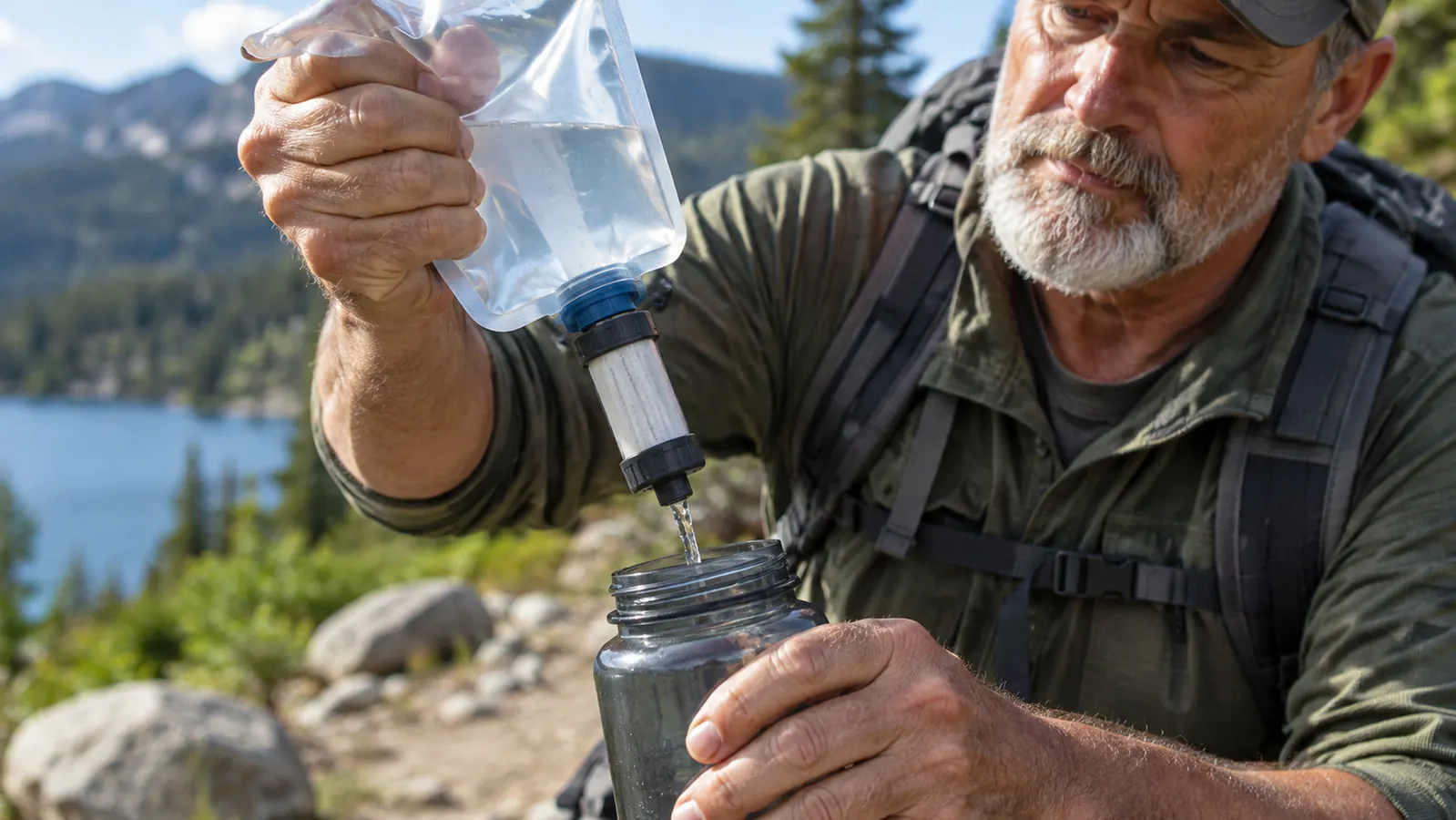
The squeeze is the part that looks easy and is easy to get wrong. If you squeeze the middle of the bag with both hands, you will fight yourself. The water has nowhere to go except back up around the threads. The better technique is to roll the bag from the bottom, like you are rolling up a tube of toothpaste, and let the pressure push the water through the filter.
I start with the bag resting on a rock or on my knee, with the filter pointing down into my bottle. I fold the bottom of the bag up once, then press with the flat of my hand. I keep the pressure steady instead of squeezing hard in bursts. A steady squeeze gives the filter time to do its job and produces a faster flow than a desperate grip. When the bag is almost empty, I roll it one more time and give it a final press. A full liter takes me about ninety seconds with steady pressure. On a windy day in the foothills, I set the bottle between my feet so it does not tip while I squeeze. I also make sure the outlet tube is pointed straight down. If it angles sideways, the water runs down the side of the bottle and you lose a good splash on the ground. It sounds small, but on a three-liter day that is a lot of wasted effort.
If the flow slows down, I stop and check the filter. A slow filter usually means the intake is clogged with sediment. I backwash it the way the instructions say, which means using the included syringe to push clean water backward through the filter. On most trips I only need to do this once, usually at the end of the day. If I am filtering from a silty source, I might do it at lunch too.
Step 4: Filter into the right bottle
The Sawyer filter threads onto the soft pouch on one side and onto a standard water bottle on the other. I carry a wide-mouth bottle that the filter threads onto directly. That way I can squeeze from the pouch, through the filter, and straight into the bottle without any extra parts. It is the fastest setup I have found.
If you do not have a bottle that the filter threads onto, you can squeeze into any clean container. I have used a cook pot, a hydration reservoir, and even a mug on a cold morning. The key is to keep the outlet of the filter from touching anything dirty. I hold the filter just above the opening of the bottle and let the water fall in. I do not let the filter tip rest on the rim of a bottle that has been sitting on the ground.
One thing I have learned is to filter more water than I think I need. On a hot day in the Sawtooths, I will filter a full liter at lunch even if I am not thirsty yet. The extra few minutes at the stream save me from rationing water on the way back. I also keep the clean bottle separate from the dirty pouch. I never pour unfiltered water into the clean bottle, because that defeats the whole system. Last August, Mark and I did a fourteen-mile loop with a climb that went on longer than the map suggested. I had filtered two liters at the last crossing, and we needed every drop before we got back to the car. The people we passed near the top were out of water and still had five miles to go. I have never once regretted taking the extra two minutes to fill a second bottle.
Step 5: Clean and store the filter for the next trip
The Sawyer filter needs a little care at the end of each trip. I backwash it with the syringe and clean water, then I store it wet. The filter should never be allowed to freeze, because ice can damage the hollow fibers. In the winter, I keep it in an inside pocket of my pack or in my jacket. In the summer, I store it in a ziplock bag with a little water in it so the fibers stay damp.
I also clean the soft pouch and the syringe with warm soapy water and let them air dry. The filter itself I do not wash with soap. I just backwash it with clean water. If I have been filtering from a source that was particularly silty, I backwash it a second time and let it sit with clean water in it overnight.
A filter that is stored properly will last for years. I have had my Sawyer MINI for a long time, and it still flows well. The brand rates the filter for 100,000 gallons, and I believe it based on how mine has held up. The care routine takes about five minutes, and it is the difference between a filter that works every time and one that fails you on the trail. One winter I left the filter in the car overnight. The temperature dropped to about ten degrees, and the next morning the flow was noticeably slower. I replaced it rather than risk it, because a frozen filter is not something you can see from the outside. Now I keep a small insulated pocket in my pack for it from November through March, and I have not had a problem since. It was a mistake I only made once, and now I check the forecast before I leave the filter in the car.
What Else Helps
A few small items make the whole system easier. I carry a one-liter soft pouch as a spare, because the one that comes with the filter is small and I like to have a backup. I also carry the backwash syringe on every trip, even though it adds a little weight. It is the only way to fix a clogged filter on the trail, and I have needed it more than once.
I use a wide-mouth bottle that the filter threads onto, and I keep a small carabiner on the pouch so I can clip it to my pack while I fill it. I also carry a tiny dropper of bleach as an emergency backup, but I have never needed it. The Sawyer filter has handled everything I have thrown at it, from clear mountain streams to murky lowland creeks.
The first time I filtered water on the trail, I did it wrong. Now I can fill two liters in about three minutes, and I have never been sick from trail water.
Start with the filter that has never let me down
The Sawyer MINI is small enough to live in my day pack, simple enough to use on a lunch break, and tough enough for years of weekend hikes. If you want to drink from the streams you pass instead of carrying every liter, this is the filter I would buy first.
Amazon Check Today's Price on Amazon →