
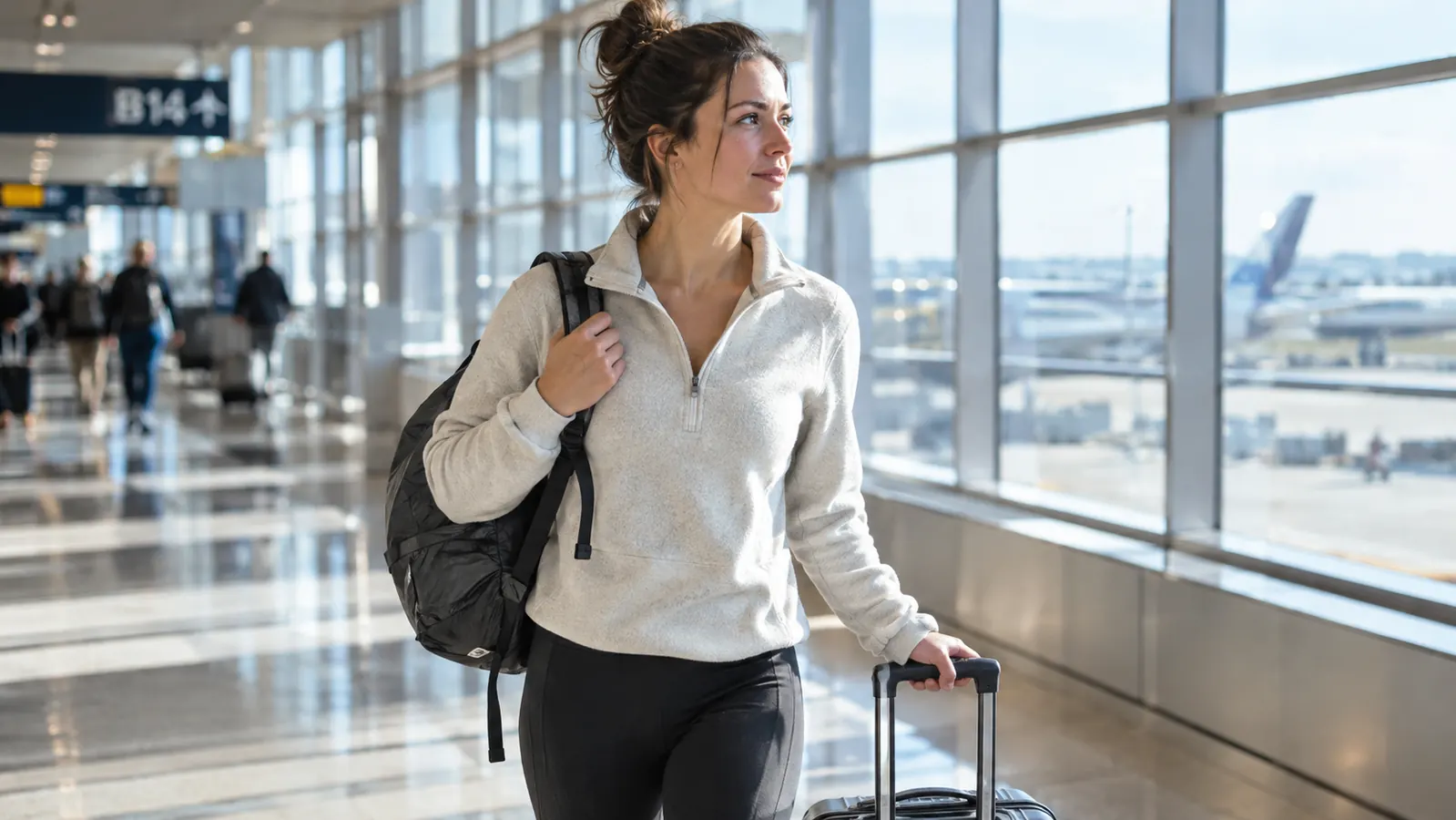
I fly out of Boise a few times a year, and I almost never check a bag. I also refuse to skip a hike just because I am traveling. For years those two things fought each other: I would either drag a rolling duffel through a trailhead parking lot or leave my good gear at home and make do with whatever I could borrow. Neither worked. The fix turned out to be a system, not a bigger suitcase, and the center of that system is the Outlander packable daypack.
This guide is the system I actually use. It fits a full day of trail hiking into one carry-on, keeps my knee happy on descents, and gets me out the hotel door in under ten minutes. No checked bag, no rental car full of gear, no buying a second pair of shoes at the destination.
The packable daypack that makes carry-on hiking work
The Outlander 20L/33L packable daypack folds into its own pocket, weighs almost nothing, and gives you a real trail pack at the trailhead. It is the piece I build every travel hiking kit around.
Amazon Check Today's Price on Amazon →Step 1: Start with the daypack, not the suitcase
The mistake I made for years was planning the trip around my main hiking pack. A 40-liter pack with a frame does not fit in a carry-on, and wearing it through the airport is miserable. The Outlander solves that by being a real daypack that disappears when you are not hiking. It packs into its own pocket, about the size of a small loaf of bread, and it weighs well under two pounds. I have weighed mine on a kitchen scale, and it comes in light enough that I do not think about it.
I use the 20L/33L version because the larger size still folds down small, and the extra capacity matters on travel days. On a flight to the Sawtooths last fall, I carried it flat in the lid of my carry-on with my trail shoes wedged beside it. Nothing else in the bag had to change. The first time I flew with it was a long weekend in Salt Lake City in April 2024. I unpacked at the hotel, found the pack still flat in the lid, and the next morning I unfolded it, loaded about six pounds of gear, and hiked a 7-mile loop in the Wasatch foothills without thinking about the pack once. The trail was rocky and exposed in places, and the pack rode steady the whole way. That was the moment I stopped treating packable daypacks as a compromise. I have flown with framed packs, I have shipped gear ahead, and I have borrowed packs at trailheads. None of it was easier than this. That is the whole point: the daypack is the one piece of hiking gear that should never cost you suitcase space, because it starts out smaller than a folded sweater.
One note on the Outlander's straps: they are not padded like a framed pack, and they are not meant to be. I keep the load under about eight pounds and the straps are fine. If you try to carry a full camera kit and three liters of water, you will feel it. Pack it like a daypack, not a backpacking pack, and it earns its place.
Step 2: Build a capsule hiking kit that fits in one packing cube
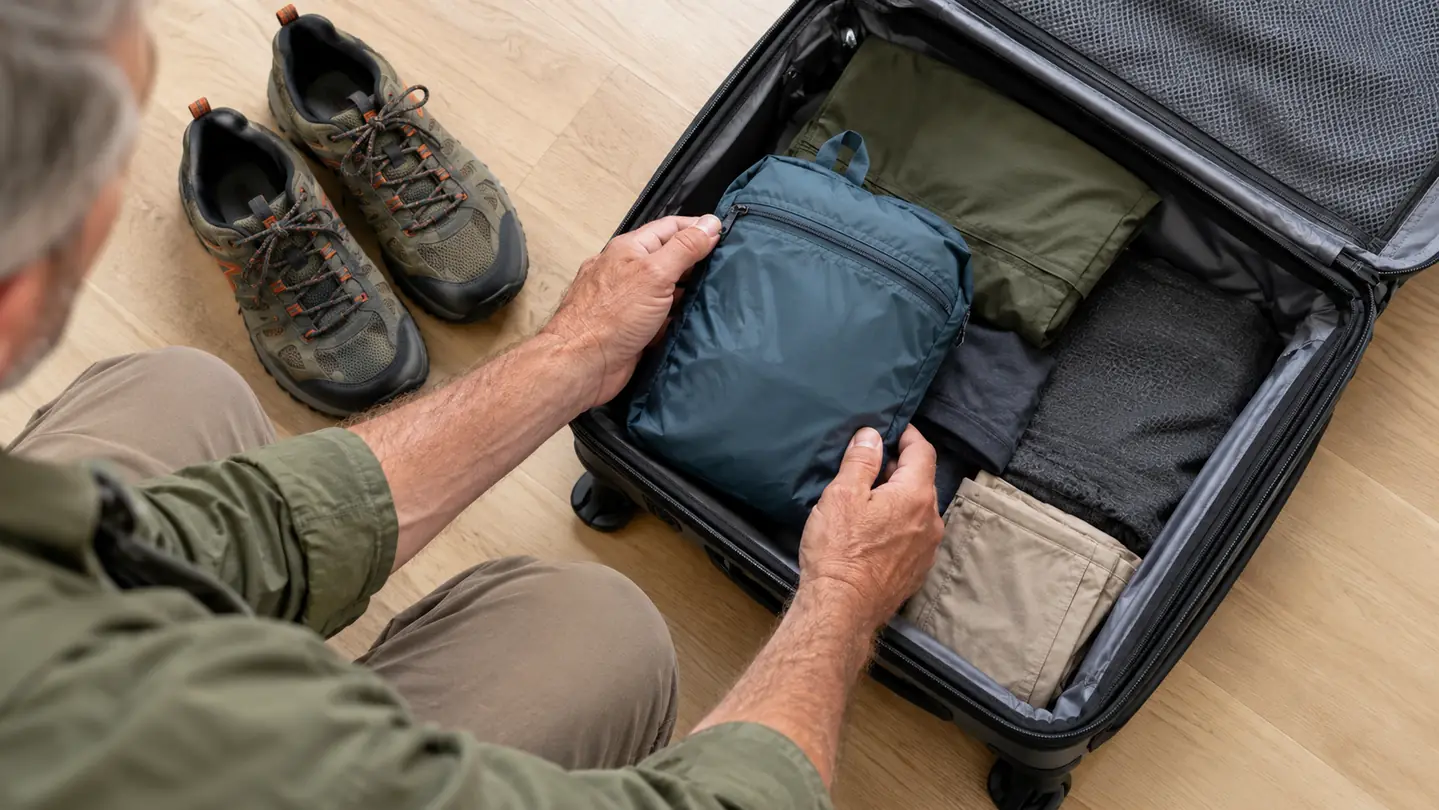
The trick to carry-on hiking is not buying smaller gear. It is deciding that your hiking kit is a single unit, packed together, and never letting it spread through the suitcase. I use one medium packing cube for the whole kit: a pair of lightweight trail runners, two pairs of wool socks, a sun hoody, a wind shell, a buff, and a small first aid kit. The cube is about 12 by 8 by 6 inches, and everything in it weighs under five pounds total. The trail runners are the heaviest thing in there, which is how I know the system is working. I built this exact kit for a week in the Sawtooths last August, and it has not changed since. I learned the hard way that a second pair of just-in-case shoes is the item that breaks the whole system, so I stopped packing them. If my feet get wet, I wash the socks in the sink and let the shoes dry overnight. They always do. That one decision, dropping the spare shoes, is what finally made the cube close. That cube lives in the bottom of my carry-on, and it comes out as one block at the hotel.
Trail runners instead of boots are the single biggest space saver. I have hiked the Sawtooths in low-top trail runners for years, and my left knee actually prefers them on descents because they let my foot move naturally. They also squish flat in a way boots never do. I wear my heaviest shoes on the plane and pack the lightest pair I own, which is usually the pair I hike in.
Wool socks are non-negotiable. I pack two pairs for a week-long trip and wash one in the hotel sink. A sun hoody and a wind shell cover almost every condition I meet on a travel hike, from a windy ridge in the morning to a hot afternoon in the canyon. If the forecast looks cold, I add a thin fleece and drop the wind shell. The cube still closes.
Step 3: Wear your heaviest items on the plane
A carry-on has a hard weight limit even when the airline does not weigh it, because you are the one carrying it through the terminal. So I wear the heavy stuff. My trail runners go on my feet for the flight. My hiking pants go on my legs. My fleece, if I brought one, goes around my waist or in the seat pocket. This sounds obvious, but it is the difference between a bag that feels fine and a bag that fights you at every gate.
I also keep the Outlander out of the suitcase on travel day. It rides on my back, empty, with my wallet and phone in the front pocket. That gives me a personal item that does not count against my carry-on, and it means the daypack is already on me when I land. On a trip to Seattle last October, I watched a man at the gate wrestle a heavy roller bag into the overhead bin while I walked on wearing my trail runners and carrying the Outlander with my phone in the front pocket. My carry-on weighed 16 pounds that day, and I know that because the airline weighed it at check-in. It passed. The Outlander on my back was not even part of the calculation. The gate agent did not even glance at the pack on my back. Wearing your heaviest items is not a gimmick, it is just arithmetic, and it is the difference between a comfortable trip and a miserable one. I have walked off planes in Denver, Salt Lake City, and Seattle and gone straight to the trailhead without ever opening my suitcase.
The Outlander has a luggage pass-through on the back, which I use at the airport when I am not wearing it. It slides over the handle of my rolling carry-on and stays put through security and the jet bridge. That one feature saves me from carrying a second bag in my hands, and it is the reason I reach for this pack instead of the other packable daypacks I have tried.
Step 4: Pack the daypack the night before, not the morning of
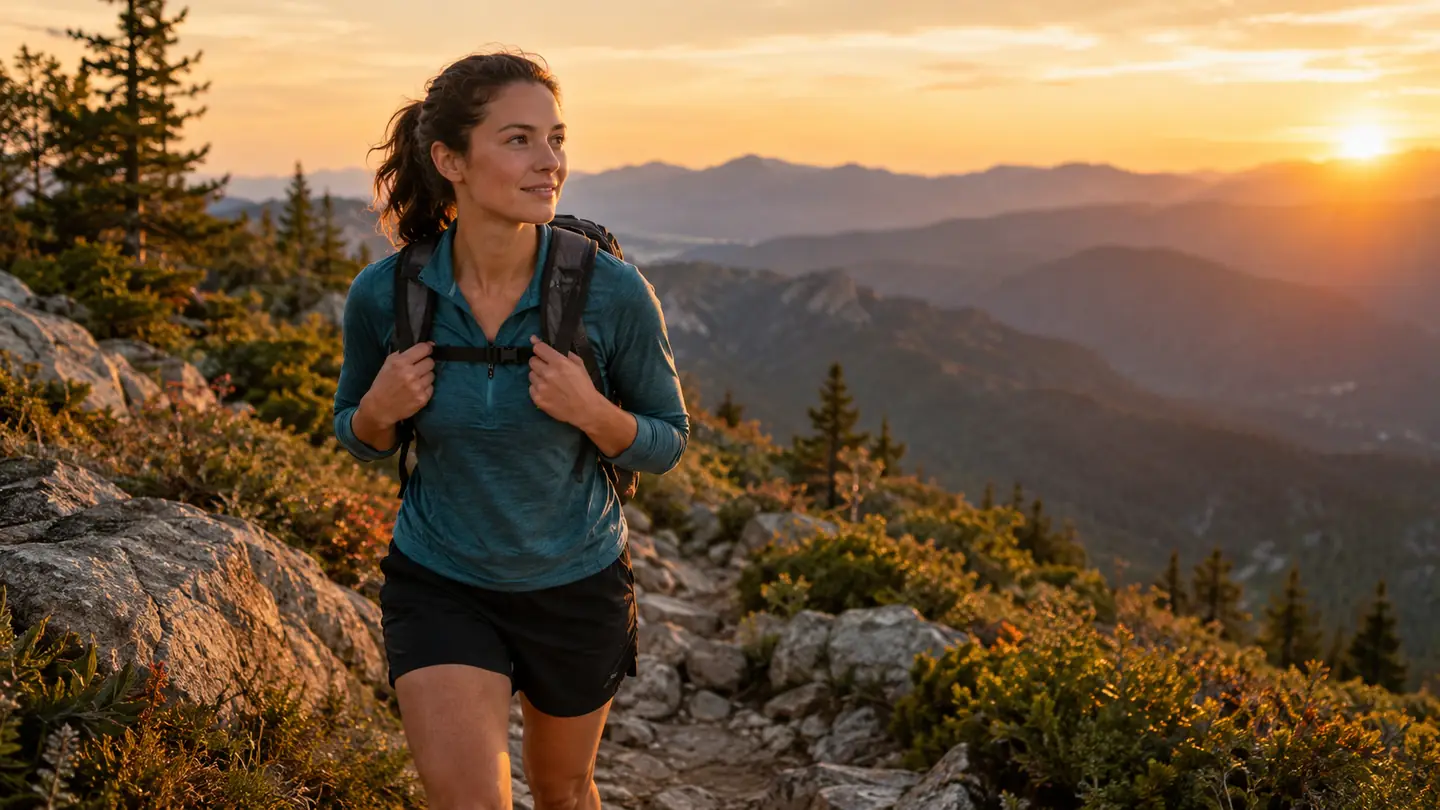
The morning of a hike is when good systems fall apart. I pack the Outlander the night before, every time. Water bladder or two bottles in the side pockets, snacks in the front pocket, first aid kit in the bottom, sun hoody and wind shell rolled at the top. In the morning I only add water and my phone, and I am out the door.
The Outlander has a hydration sleeve inside, and I use it on longer days. On a 9-mile loop in the Boise foothills with 1,800 feet of climbing, I carried a 2-liter bladder and never felt the pack shift. The chest strap helps here. I am 5'6" with a short torso, and the sternum strap lets me pull the pack in close so it does not bounce on the downhills.
If I am hiking somewhere unfamiliar, I also lay out my map and a printed copy of the trail description the night before. That habit came from a specific failure. In June 2023 I hiked a loop in the Boise foothills that the trail app said was 5 miles. It was 7.2 miles, and I ran out of water a mile from the car. Now I print the trail description from the Forest Service page, write the mileage on it in pen, and tuck it in the front pocket of the Outlander the night before. On a travel day I do the same for the trail I plan to hike at the destination. It takes two minutes, and it has never once been wasted time. The printed copy matters because the phone dies, the app loses signal, and paper does not care about any of that. That is not gear advice, it is habit advice, and it has saved me more than once on trails that looked shorter on the screen than they were on the ground.
Step 5: Keep the trail day simple, then pack it down before dinner
On the trail, the Outlander behaves like a normal daypack. The main compartment swallows a puffy jacket, a lunch, and a camera. The side pockets hold bottles. The front pocket keeps my phone and keys where I can reach them without stopping. I have used it on everything from a 4-mile foothills stroll to a 12-mile day in the Sawtooths, and it has never once felt like a compromise.
The part that surprises people is the end of the day. The Outlander folds back into its own pocket in about thirty seconds. I stuff it in the top of my carry-on, change out of my hiking clothes, and the whole kit is gone. By the time we are at dinner, the only evidence of the hike is the dirt on my shoes, and those go in a plastic bag in the suitcase.
That fold-down moment is why I keep recommending the Outlander to friends who travel. A framed daypack takes up half a suitcase for the whole trip. This one takes up nothing for 95 percent of the trip and gives you a real pack for the 5 percent when you are actually hiking. That ratio is the entire argument.
What Else Helps
A few things that make carry-on hiking easier, none of which require buying more gear. First, call the hotel and ask about a laundry sink; a hotel with a sink and a clothesline saves you from packing a week of socks. Second, learn the two-minute sink wash for wool socks and base layers, because it turns a 5-day trip into a 5-day trip with two pairs of socks. Third, keep a small dry bag in the kit for wet shoes and wet clothes, so the rest of your suitcase stays dry. Fourth, if you are flying with a personal item anyway, make it the daypack, like I do with the Outlander. And fifth, remember that most trailheads do not care what you look like. I have hiked in airport clothes more times than I can count, and the trail has never once complained.
A framed daypack takes up half a suitcase for the whole trip. The Outlander takes up nothing for 95 percent of the trip and gives you a real pack for the 5 percent when you are actually hiking.
Start your next trip with a pack that disappears until you need it
The Outlander 20L/33L packable daypack folds into its own pocket, slides over your carry-on handle, and hikes like a real daypack at the trailhead. It is the piece I build every travel hiking kit around.
Amazon Check Today's Price on Amazon →