
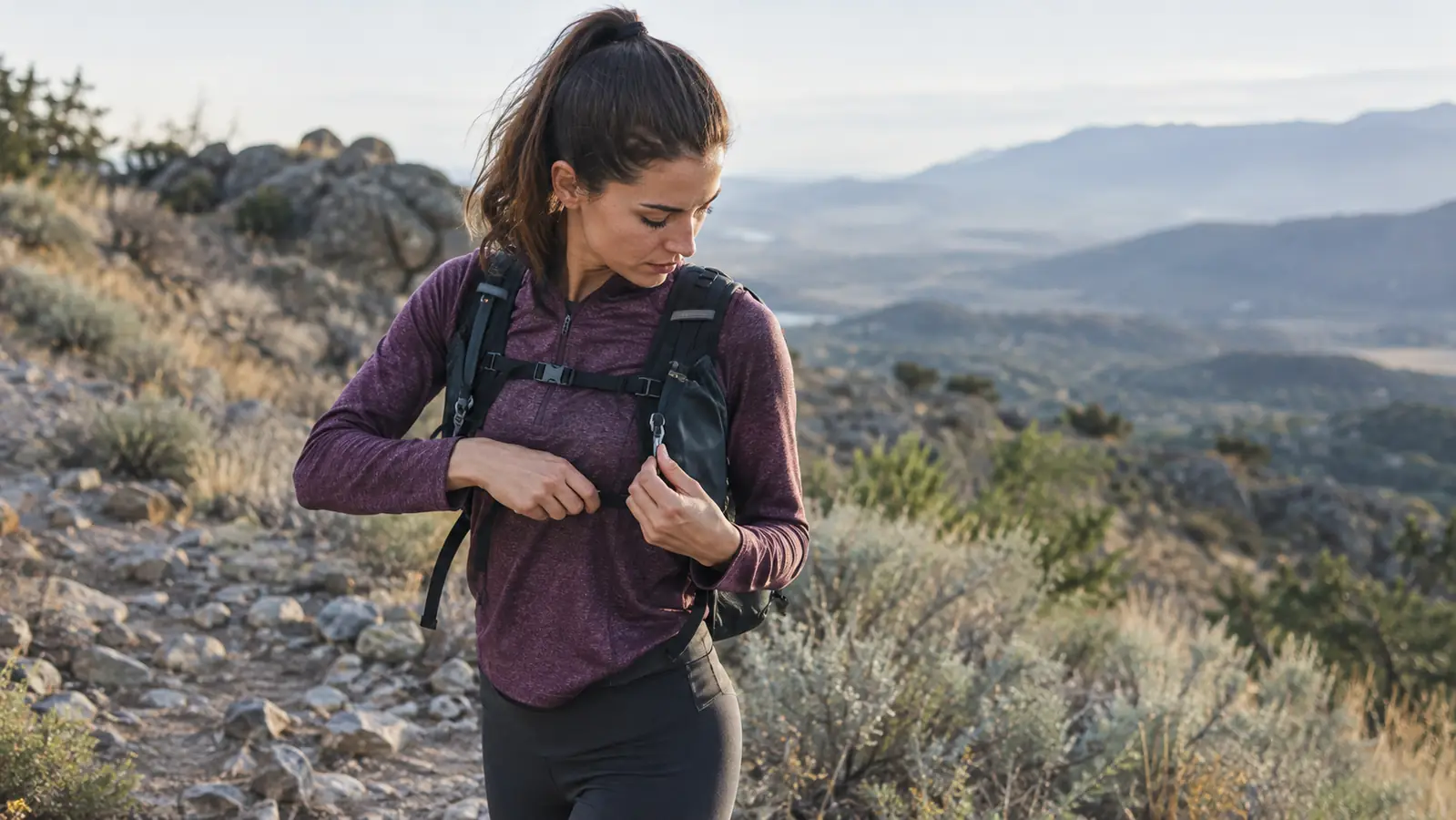
I bought the Outlander packable daypack because I was tired of paying airline baggage fees for a second bag on trips where I only needed a day pack at the destination. Fifteen years of weekend hiking in the Boise foothills and the Sawtooths had taught me exactly what I need on the trail, and the idea of a pack that folds into its own pocket sounded like the answer to a problem I had been carrying around for years. So I ordered one, took it on a full season of hikes, and then took it on two carry-on flights to see whether it held up when it was not just a trail pack but a travel pack too.
Here is the honest version. The Outlander packable daypack is a genuinely useful piece of gear, and it is also a pack with real limits that the product photos do not show you. It is not a hiking pack in the way my usual day pack is a hiking pack. It is a packable pack that does a surprisingly good job on the trail, and the difference matters more than the listing suggests.
The Quick Verdict
A packable daypack that earns its place in a carry-on for travel and light trail days, as long as you keep your load under about 8 pounds and do not expect real back support.
Amazon Check Today's Price →The packable daypack I now keep in my carry-on for every trip
After a full season of foothills hikes and two carry-on flights, the Outlander packable daypack is the pack I reach for when I need a day pack at the destination. It packs flat, carries a surprising amount, and costs less than one checked-bag fee.
Amazon Check Today's Price on Amazon →How I've Used It
I have used the Outlander packable daypack for about six months, on more than twenty hikes and two trips. The hikes ranged from a quick three-mile loop in the Boise foothills on a Tuesday evening to a nine-mile day in the Sawtooths with about 1,800 feet of elevation gain. The trips were a long weekend in Portland and a week in southern Utah, both with only a carry-on, which is how I have traveled for years.
On the trail, I carried the usual things: a 1.5 liter water bottle, a light rain shell, a puffy jacket in the cooler months, a small first aid kit, sunscreen, a snack, and my keys and phone. On the Portland trip, I used it as a day pack for walking around the city and for a short hike in Forest Park. On the Utah trip, I used it for three hikes in Zion and one long day in Bryce Canyon, and I also used it as a personal item on the flight home, stuffed under the seat in front of me.
That last use is the one that surprised me. A packable daypack that works as a trail pack and then fits under an airplane seat is a rare combination, and the Outlander does both without complaint. The tradeoff is that it does not carry a heavy load well, and I learned that lesson on a day when I packed it with more than I should have.
What Nobody Tells You About the Fabric
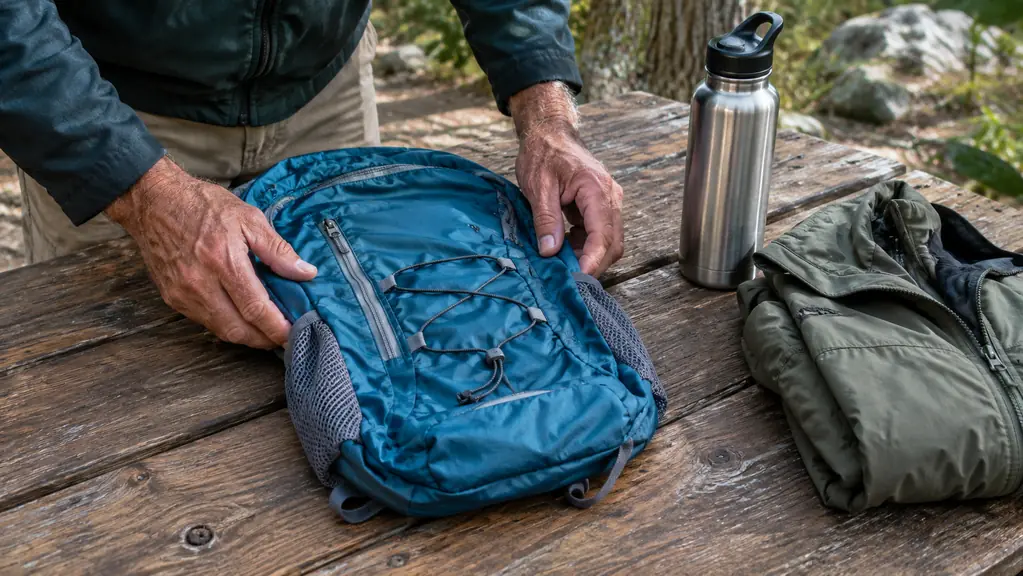
The listing calls this the most durable packable daypack, and the fabric is genuinely tougher than most packable packs I have handled. The material has a slightly stiff, woven feel rather than the flimsy nylon of cheaper packable daypacks, and it has survived six months of being shoved into a carry-on, thrown onto granite, and dragged across sagebrush without a tear or a loose seam.
What nobody tells you is that the fabric is not waterproof. It is water resistant in a light sprinkle, and that is about it. On a drizzly day in the foothills, the outside of the pack beaded water nicely, but the inside stayed dry only because my rain shell was on top of my gear. In a real downpour, or if you set the pack down on wet ground, your stuff will get damp. I now carry a dry bag for anything that absolutely cannot get wet, which is the same habit I have with most packs in this weight class.
The other thing about the fabric is that it shows wear quickly even when it is not actually wearing out. The surface scuffs easily, and after a few hikes the pack looked more trail-worn than it really was. That is cosmetic, not structural, but it is worth knowing if you expect a pack that still looks new after a season.
The Comfort Question
Here is the honest truth about comfort. The Outlander packable daypack has no frame, no real hip belt, and only lightly padded shoulder straps. For a light load, that is fine. For a heavy load, it is not fine, and the difference shows up fast.
I am 5'6" with a short torso, and I have a left knee I have to manage on long descents. I mention the knee because pack comfort is not just about shoulders. When a pack shifts and sways, my knee has to work harder to keep me stable on uneven ground. With the Outlander loaded under about 8 pounds, the pack stayed close enough to my back that I did not notice it. With a 12 pound load, which I tried once on a longer day, the pack sagged, the straps dug in, and I felt every step on the way down.
What made the biggest difference was how I packed it. With no frame, the pack takes the shape of whatever is inside, so I learned to put my rain shell or puffy flat against my back first and keep the water low and centered. Packed that way on a 5-mile foothills loop with a liter and a half of water, it rode close and quiet. Packed carelessly on the same loop, with the bottle sliding around loose, it swung on every step and pulled on my shoulders by the second mile.
The shoulder straps are the biggest compromise. They are thin and only lightly padded, and they are set close together, which suits my narrow frame but would likely feel tight on someone with broader shoulders. There is a sternum strap, and I used it on every hike, because without it the pack tends to pull the straps outward. The sternum strap helps a lot, and I would not use this pack without it.
Under about 8 pounds, the Outlander packable daypack is comfortable enough that I forget I am wearing it. At 12 pounds, I felt every step, and my left knee let me know about it on the descent.
Pockets and Organization
The Outlander packable daypack has one main compartment, one front pocket, and two small side pockets that fit a standard water bottle. That is the whole layout, and it is both the pack's strength and its weakness.
The main compartment is a single open space with no internal dividers, which means everything ends up in one pile. I solved this with a small packing cube for my first aid kit and a stuff sack for my jacket, and after that the pack worked fine. The front pocket is useful for flat things like a map, a phone, or a snack, and it is easy to reach without taking the pack off.
The side pockets are the weak point. They are not elastic, so a tall water bottle can slide out when you bend over. I lost a bottle this way once on a steep section of trail, and after that I only used the side pockets for items I did not mind losing. A bottle with a clip, or a bottle short enough to sit fully inside the pocket, works fine. A tall bottle does not.
How It Packs Down
The pack stuffs into its own front pocket, and the resulting bundle is about the size of a large sandwich, maybe 9 by 5 by 3 inches. It weighs almost nothing, which is the entire point of a packable daypack, and it is easy to shove into a corner of a carry-on or leave in the bottom of a tote bag.
What nobody tells you is that the pack does not stuff back into its pocket as neatly as the photos suggest. The first few times, I had to wrestle with it, and the zipper on the stuff pocket is small and finicky. After a few tries I found a method: fold the pack in thirds lengthwise, roll it from the bottom, and tuck the straps in as you go. Once I figured that out, it took about thirty seconds. Before that, it took a few minutes and some patience.
The other thing worth knowing is that the pack is not truly flat when packed. The straps and the fabric create a slight bulge, which is fine in a carry-on but noticeable if you are trying to slide it into a tight pocket of a larger bag.
My fix for the fold-down is to empty every pocket, flatten the main compartment by hand, fold the straps in toward the middle, and only then turn the front pocket inside out around it. Done in that order it goes back in on the first or second try. Done in a hurry at a gate, it does not, and I have learned to give it the extra minute.
How It Held Up Over Six Months
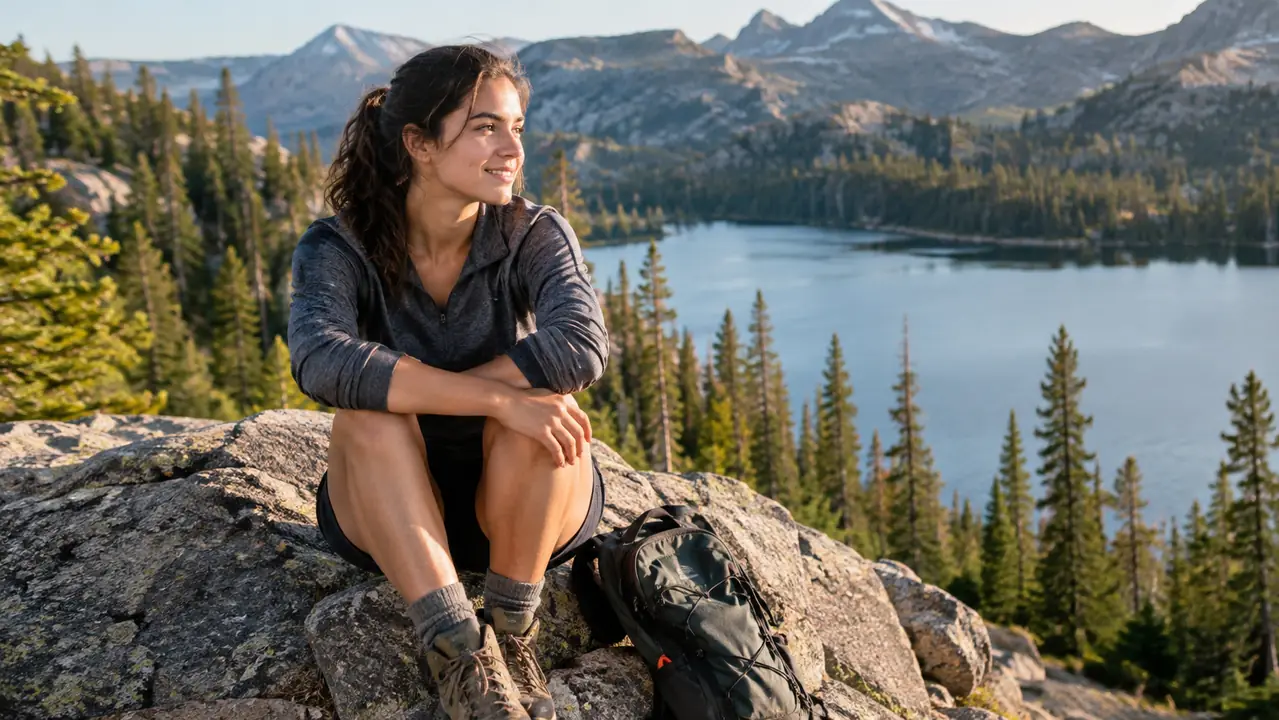
After six months of regular use, the Outlander packable daypack has no structural damage. The seams are intact, the zippers still work smoothly, and the fabric has no tears. The scuffs on the surface are cosmetic, and the pack still looks fine from a few feet away.
The one thing that has worn is the zipper pull on the main compartment. It is a small plastic pull, and it has started to crack. The zipper itself still works, but I expect the pull will eventually break, and I will replace it with a small cord loop when it does. That is a minor issue, but it is the kind of detail that tells you this is a packable pack, not a lifetime pack.
I also noticed that the pack's water resistance has decreased slightly over time. The first few hikes, water beaded on the surface. Now, after six months of use and a few trips through the washing machine on a gentle cycle, the fabric wets out more quickly. I treat it as a light sprinkle pack, not a rain pack, and I plan accordingly.
What I Liked
- Packs down small enough to live permanently in a carry-on
- Tougher fabric than most packable daypacks I have handled
- Carries a light load of about 8 pounds without digging in
- Simple layout with a reachable front pocket and a useful sternum strap
- Held up through a full season with no structural damage
Where It Falls Short
- No frame and thin straps make anything over about 10 pounds genuinely uncomfortable
- Fabric is water resistant, not waterproof, and the resistance fades with washing
- Tall water bottles can slide out of the non-elastic side pockets
- Scuffs easily and shows trail wear quickly
- The stuff pocket zipper is small and finicky the first few times
Who This Is For
The Outlander packable daypack is for the traveler who wants a day pack at the destination without paying for a second bag. It is for the hiker who wants a light pack for short, well-groomed trails where the load stays under about 8 pounds. It is for the person who wants a spare pack to keep in the car, the office, or the bottom of a larger bag, just in case.
It is also for the hiker who already owns a proper framed day pack and wants something lighter for the times when a framed pack is overkill. I still reach for my main day pack for long, rough days in the Sawtooths. But for a three mile loop after work, or a day of walking around a city, the Outlander is the pack I grab.
Who Should Skip It
Skip the Outlander packable daypack if you regularly carry more than about 10 pounds. The lack of a frame and the thin straps make heavy loads genuinely uncomfortable, and no amount of clever packing fixes that. Skip it if you need a pack for rough, off-trail hiking where you need the load to stay locked to your body. This pack shifts and sways under a heavy load, and on steep terrain that is both tiring and a little unsafe.
Skip it if you want a pack that looks new after a season of hard use. The fabric scuffs easily, and the zipper pull is already cracking on mine. It is a tool, not a piece of gear you will baby, and it shows. And skip it if you need real organization. With one main compartment and one front pocket, this pack will not keep your gear sorted for you.
Alternatives I Considered
I compared the Outlander packable daypack with the Eddie Bauer Stowaway packable backpack, which is the other packable daypack I see most often on the trail and in airport security lines. The Eddie Bauer is lighter and packs down smaller, and its fabric has a similar water resistance. The Outlander feels tougher, with a stiffer fabric and more substantial zippers, and it carries a slightly heavier load before the straps start to dig in.
I also considered a few ultralight framed day packs, but they cost several times more and do not pack down anywhere near as small. For my use, which is mostly travel and short hikes, the Outlander is the better balance. If I were buying a pack for long, rough days only, I would buy a framed pack instead.
The packable daypack that has earned a permanent spot in my carry-on
The Outlander packable daypack is not perfect, but it is the pack I keep reaching for on trips and short hikes. It packs down small, carries a light load comfortably, and has held up through a full season of use. If you travel with only a carry-on and want a day pack at the destination, this is the one to start with.
Amazon Check Today's Price on Amazon →