
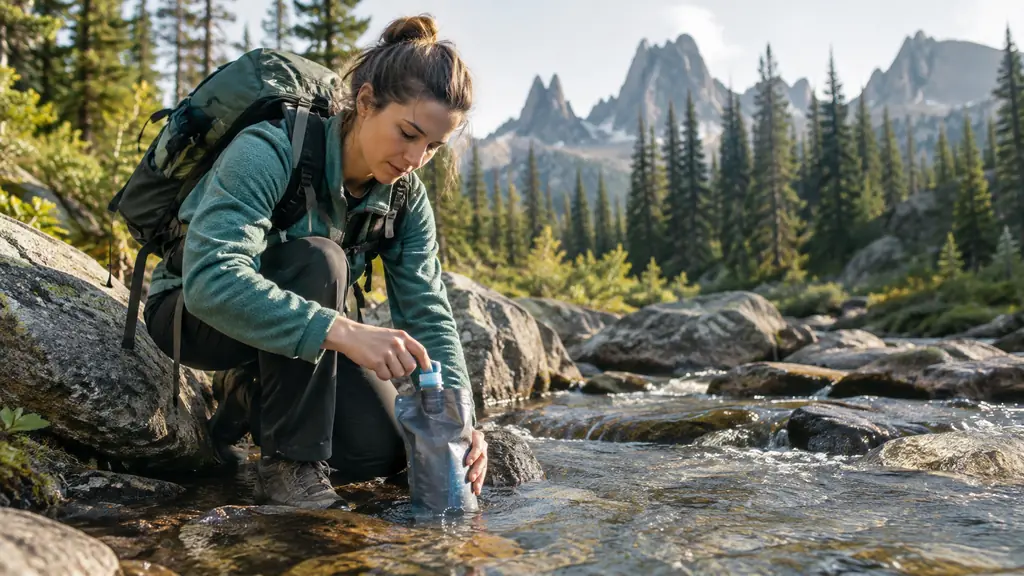
I bought the Sawyer Mini because every thru-hiker forum on the internet said it was the only filter worth owning. Then I spent a full season carrying it in the Boise foothills, the Sawtooths, and a wet week on the Olympic Peninsula. The honest version is more complicated than the forums suggest. The Sawyer Mini is a genuinely good filter with a genuinely annoying squeeze-bag system, and whether you should buy one depends entirely on how you actually hike.
I am Nora. I am a physical therapy assistant, I have hiked most weekends for about fifteen years, and I test gear the slow way: I carry it until it either proves itself or annoys me into replacing it. This review is the result of about nine months with the Sawyer Mini, including one trip where I filtered every drop of water for four people for five days. That trip is where my opinion of this filter got honest.
The Quick Verdict
The Sawyer Mini filters water brilliantly and weighs almost nothing, but the included squeeze bag is the weak link. Buy it for the filter, plan to replace the bag, and you will be happy.
Amazon Check Today's Price →The filter that 41,000 hikers already trust
The Sawyer Mini removes 99.99999% of bacteria and 99.9999% of protozoa, weighs 2 ounces, and fits in the palm of your hand. If you want the lightest reliable filter for solo trips, this is it.
Amazon Check Today's Price on Amazon →How I've Used It
My usual setup is a 2.5-mile loop in the Boise foothills after work, where I do not need to filter anything because I carry a bottle from home. The Sawyer Mini lives in my day pack anyway, because the foothills have exactly one reliable creek and I have been caught without water on a hot June evening more than once. On weekend trips in the Sawtooths, the Mini is my primary filter. On the Olympic Peninsula trip, it was the only filter for four people.
The filter itself is a small cylinder about the size of a fat marker. It screws onto the included squeeze pouch, or onto a standard plastic water bottle with the included adapter, or onto the included drinking straw. You can also backflush it with the included syringe. I have used all four configurations, and each one has a different personality.
The squeeze configuration is the one you see in every photo. You fill the pouch from a stream, screw on the filter, and squeeze the pouch so water pushes through the filter into your bottle or directly into your mouth. It works. It also takes two hands, a flat surface or a very patient partner, and more forearm effort than you expect. The first time I used it, I squeezed too hard, popped the pouch off the filter, and dumped a liter of creek water onto my boots.
There is a third setup most people never try, and it is the one I use on hot weekends. With the included adapter, the Sawyer Mini can sit inline on the hose of a hydration reservoir, so you fill the bladder with untreated water and the filter cleans it on the way to your mouth. It slows the sip down, and you have to be strict about which side of the filter is dirty, but it means I can refill from a creek without stopping to squeeze anything. On an all-day hike in August that saved me two long breaks.
What Nobody Tells You About the Squeeze Bag
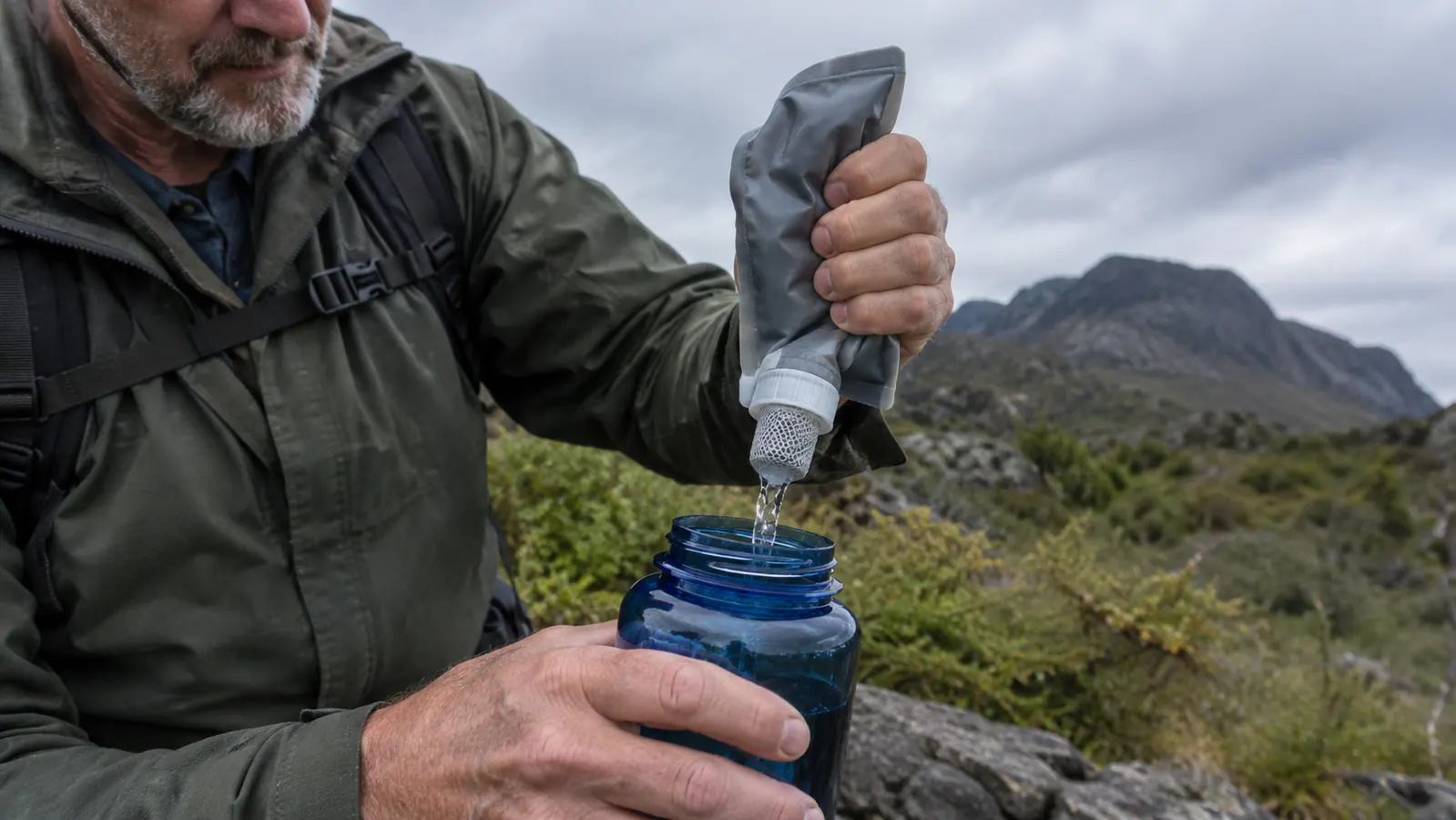
The included 32-ounce squeeze pouch is the most complained-about piece of gear in the entire Sawyer ecosystem, and the complaints are fair. The pouch is made of a stiff, slick plastic that is hard to grip when wet. It does not stand up on its own. The wide mouth is awkward to fill from a shallow creek without scooping up sand. And after about six months of regular use, mine developed a pinhole leak near the seam.
Here is what nobody tells you: you do not have to use the pouch at all. The Sawyer Mini screws directly onto a standard plastic water bottle with the included adapter. You fill the bottle from the stream, screw on the filter, and drink by squeezing the bottle or tipping it upside down. This is faster, easier, and uses a bottle you already own. I switched to this method after the pouch leak and never looked back.
The bottles that work best are the cheap, thin-walled kind you can buy at any gas station. They share the common bottle thread the Mini expects, they squeeze easily, and they cost almost nothing to replace when they crack. I carry two of them: one marked with tape as the dirty bottle and one clean. That one bit of tape has done more for my water routine than any accessory I have bought, because the worst mistake with any filter is letting dirty water touch the clean side.
The straw configuration is the one I use least. You screw the filter onto the straw, drop it into a water source, and drink directly. It is fine for a quick sip from a clean mountain lake, but it does not filter a full bottle for later, and it is awkward to use from a crouched position. I keep the straw in my pack as a backup, not as a primary system.
The filter is the best part of this system. The pouch is the weakest. Plan around that and the Sawyer Mini is hard to beat.
The Filter Itself Is Excellent
The Sawyer Mini uses hollow fiber membrane technology, the same kind of filter used in the larger Sawyer Squeeze. It removes 99.99999% of bacteria, 99.9999% of protozoa, and 100% of microplastics, according to the manufacturer. It does not remove viruses, which matters only if you are traveling to places with contaminated water sources. For backcountry streams in the lower 48, it is more than enough.
The flow rate is the tradeoff. The Mini is smaller than the Sawyer Squeeze, and smaller means slower. On a good day with a clean water source, I can fill a 750-milliliter bottle in about two minutes of steady squeezing. On a silty creek after a rainstorm, it takes closer to four minutes, and the filter starts to slow noticeably. The backflush syringe fixes this in about thirty seconds, but you have to remember to do it.
Backflushing is the maintenance step that decides how this filter feels after a few months. The included syringe pushes clean water backward through the membrane and clears out what has built up. When I skipped it for a few weekends in a row, the flow dropped to a trickle and I blamed the filter. When I started backflushing after every trip, at the kitchen sink before the gear went back in the bin, the flow came right back. It takes about two minutes. If you buy the Sawyer Mini, make that part of unpacking, the same as drying your socks.
I have filtered water from snowmelt streams, murky alpine lakes, a livestock trough in the Owyhee desert, and a questionable puddle on a trail in the rain. The Sawyer Mini has never made me sick. That is the only job that matters, and it does that job flawlessly. I have also dropped the filter on rocks, frozen it overnight by accident, and run it through a washing machine cycle when I forgot it in a jacket pocket. It still works.
Two cautions I take seriously. First, a hollow fiber filter like this one is made for bacteria and protozoa, not viruses or chemicals, so in a place where runoff or human waste is a real concern I either pick a different source or treat the water further. Second, freezing can damage the membrane without leaving any sign you can see. On cold shoulder-season nights the filter sleeps in my jacket pocket or my sleeping bag, never in an outside mesh pocket.
The Weight and Packability Story
The Sawyer Mini weighs 2 ounces. That is the entire reason to choose it over the Sawyer Squeeze, which weighs about 3.5 ounces, or a pump filter, which weighs over a pound. When you are counting grams for a multi-day trip, 2 ounces is a real difference. When you are carrying a day pack in the foothills, it is not. I carry the Mini because it disappears into the bottom of my pack, not because I can feel the weight.
The full kit, including the pouch, the straw, the adapter, and the syringe, fits in a stuff sack the size of a deck of cards. That is genuinely impressive. I have carried it in a hip belt pocket, a jacket pocket, and the brain of my pack. It is the most packable filter I have used, and I have used several.
The tradeoff is that the small size makes the filter easier to lose. The Mini is small enough to vanish into a pack pocket, and I have spent more than one evening digging through my pack looking for it. I now keep it in a bright orange stuff sack, which solves the problem completely. That is the kind of detail you only learn by using the thing.
I lost mine once, for about twenty minutes, at a lake above the trees. It had rolled under a rock while I was refilling and I only found it because I went back over every step. Now it rides on a short cord clipped inside the lid pocket of my pack, and that cord has never come off. If you buy one, buy a cheap cord with it.
On a normal summer weekend I filter about four liters a day for myself, and the Sawyer Mini keeps up as long as I stop at a creek before I am thirsty rather than after. On the one trip where Mark's filter cracked and I filtered for both of us, it took noticeably longer at every stop. It still worked, and that is the honest summary of this filter.
Who This Is For
The Sawyer Mini is for the hiker who wants one reliable filter that weighs almost nothing and costs less than a nice dinner. It is for solo hikers, ultralight backpackers, and anyone who filters water a few times a month rather than every single day. It is for the person who is willing to learn the quirks of a squeeze system in exchange for a filter that fits in a pocket.
It is also for the person who hikes with a standard plastic water bottle. The bottle adapter turns the Mini into a gravity filter that requires no pouch at all, and that configuration is genuinely excellent. If you already carry a disposable bottle or a Smartwater bottle, the Mini is the lightest way to make it a filter.
Who Should Skip It
Skip the Sawyer Mini if you filter water for a group on every trip. The slow flow rate and the small pouch make group filtering a chore. On the Olympic Peninsula trip, I filtered for four people and spent most of each evening squeezing. The larger Sawyer Squeeze, or a gravity system, would have been faster and less work.
Skip it if you hate fiddly gear. The Mini requires backflushing, careful filling, and a certain amount of patience. If you want to screw a filter onto a bottle and drink without thinking, a bottle filter like the GRAYL or a Katadyn BeFree is a better fit. The Mini is a tool, not a convenience.
If that sounds like a lot of rules, it is fewer than it reads. Fill carefully, keep dirty and clean apart, backflush after each trip and keep it from freezing. After the first month it was automatic for me, and the Sawyer Mini went from a gadget I was nervous about to the first thing I pack.
And skip it if you hike in places with questionable water quality. The Mini does not remove viruses, and in parts of Asia, Africa, and South America, that matters. For those trips, look for a filter that meets the higher standard. For the lower 48, the Mini is plenty.
What I Liked
- Weighs only 2 ounces, the lightest full filter I have used
- Filters 99.99999% of bacteria and 99.9999% of protozoa
- Works with the included pouch, a standard water bottle, or the straw
- Backflush syringe keeps the filter flowing for years
- Costs far less than most filters and lasts for 100,000 gallons
- Fits in a hip belt pocket or the palm of your hand
Where It Falls Short
- Included squeeze pouch is stiff, slippery, and prone to leaking
- Flow rate is slow, especially with silty water
- Squeezing takes two hands and real effort
- Does not remove viruses, so it is not for international travel
- Small size makes it easy to lose in a pack
How It Compares to the Alternatives I Considered
I tested the Sawyer Mini against the Katadyn BeFree and the Sawyer Squeeze before settling on the Mini for my own pack. The BeFree has a faster flow rate and a softer, more flexible bottle, but the bottle is the filter, which means you have to replace the whole thing when the filter wears out. The Squeeze is faster and easier to use with groups, but it is heavier and bulkier. The Mini is the compromise that makes sense for my solo trips.
The Sawyer brand has a reputation for durability, and my experience supports it. The Mini has survived being dropped, frozen, and washed. The filter still flows, and the backflush syringe still works. I have replaced the pouch once, and I expect to replace it again. The filter itself shows no signs of slowing down.
Still the best 2 ounces in my pack
After nine months and hundreds of liters, the Sawyer Mini is still the filter I reach for. It is not perfect, but it is light, reliable, and honest about its limits. If you hike solo and want a filter that disappears into your pack, this is the one.
Amazon Check Today's Price on Amazon →