
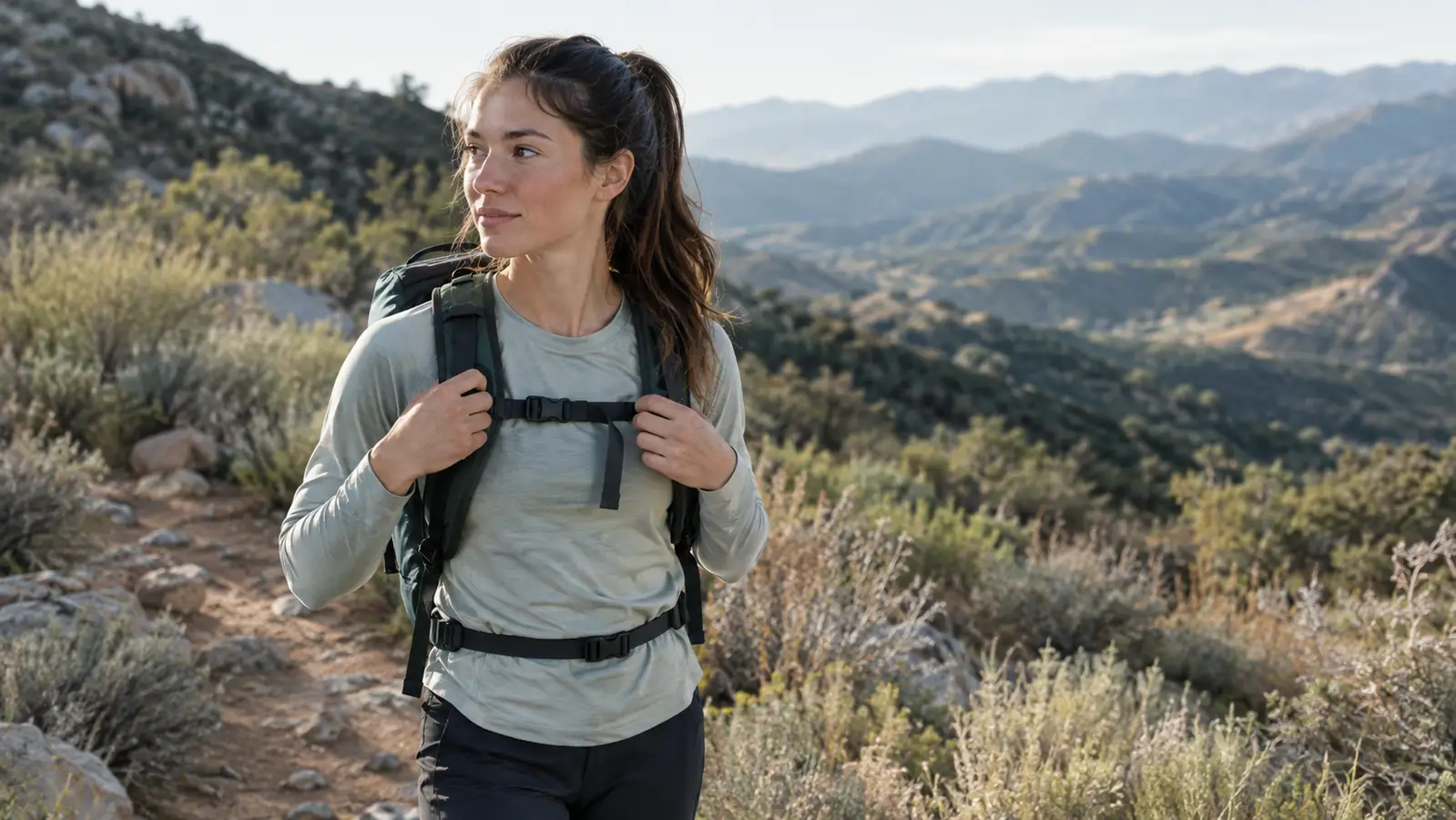
I bought the SKYSPER 20L daypack in March, mostly because I needed something small enough to count as a personal item on a flight to see my sister in Portland. Six months later, it has done the Boise foothills on weeknights, a wet weekend in the Sawtooths, and that flight. It has also been rained on, dropped on granite, and stuffed under an airplane seat. Here is the honest review, including the things I would want to know before buying it.
For context: I am 5'6" with a short torso, and I have hiked most weekends for about fifteen years. My usual load for a day hike is a 2L water bladder, a puffy jacket, a first aid kit, snacks, and a headlamp. That is right around 10 to 12 pounds. I am not a thru-hiker and I do not need ultralight gear. I need a pack that does not fight me on the trail.
The Quick Verdict
A genuinely comfortable, well-organized 20L pack for light day hikes and travel, with a few compromises in materials and rain protection that matter if you hike wet or rough.
Amazon Check Today's Price →A 20L pack that actually fits a short torso
After six months of testing, the SKYSPER 20L is the pack I reach for on most weeknight hikes. It carries 10 to 12 pounds comfortably, the hip belt keeps it stable on uneven tread, and it fits under an airplane seat. Check today's price on Amazon to see if it's the right size for your load.
Amazon Check Today's Price on Amazon →How I've Used It
I have used the SKYSPER 20L on 30 or so hikes since March. The most common trip is a 5 to 7 mile loop in the Boise foothills after work, carrying water, a light jacket, a headlamp, and a sandwich. I have also taken it on a two-day trip to the Sawtooths where it rained for most of one afternoon, and on a flight where it lived under the seat in front of me. Mark came on the Sawtooth trip, and we parked the Outback at the trailhead before a loop that gained about 1,800 feet over 9 miles.
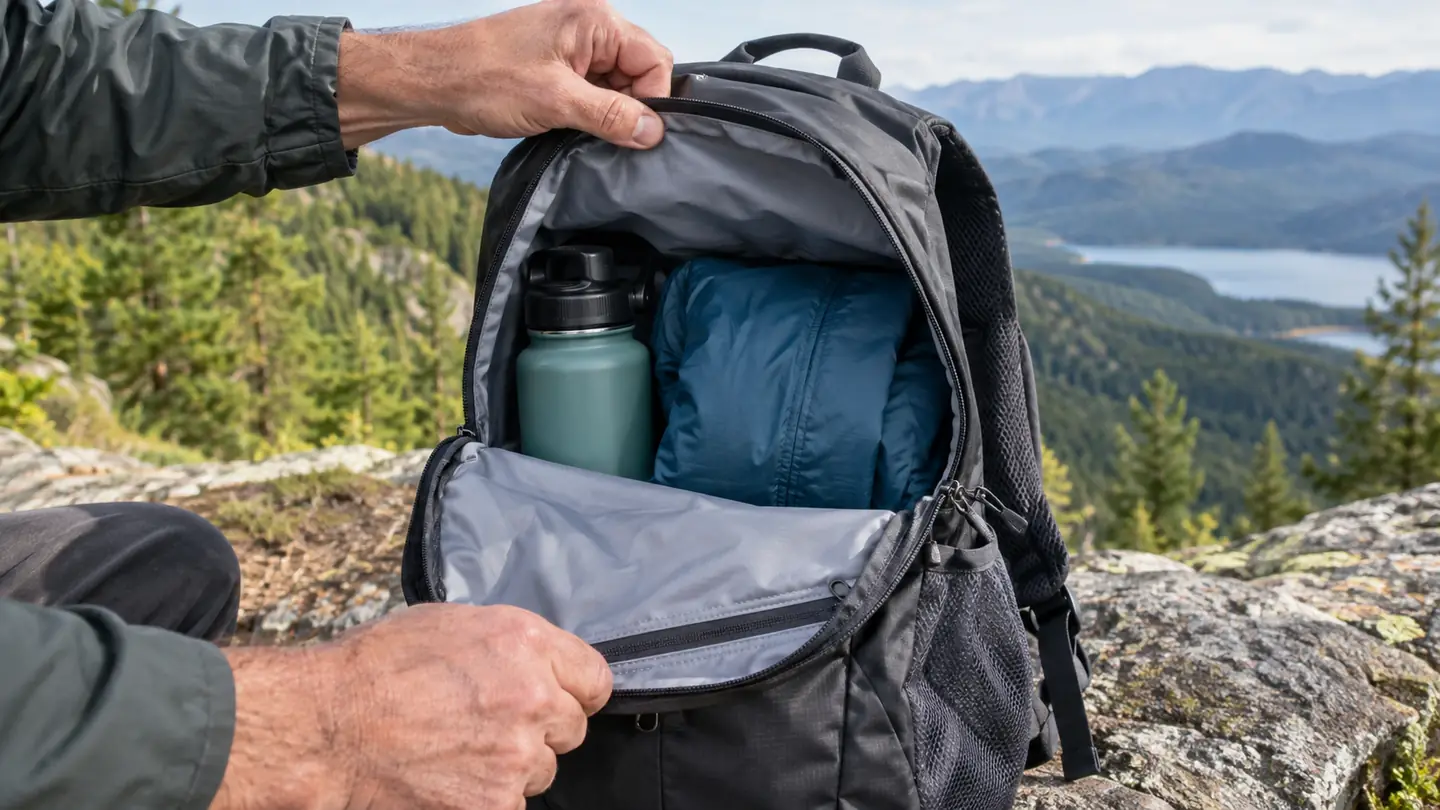
The pack has a main compartment, a small pocket on the front, two mesh side pockets, and a hidden pocket on the back panel. There is a sleeve inside for a hydration bladder, with a port for the hose. The hip belt is padded, the shoulder straps are padded, and there is a sternum strap that clips at a sensible height for a short torso.
My standard load is a 2L bladder, a puffy jacket, a first aid kit, a snack bag, keys, and a phone. That comes to about 11 pounds. The pack carries it without sagging, and the hip belt keeps most of the weight off my shoulders. On a 7 mile hike with 1,200 feet of climbing, I did not feel the need to stop and re-tighten anything. On one evening hike in late April, the temperature dropped from 62 to 48 degrees in the last two miles, and I added my puffy jacket to the load without having to rearrange anything. That kind of easy access matters more than specs.
The dustiest trip was to the Owyhees in May, where the pack picked up a fine layer of red dust on the outside but kept everything inside clean. The main zipper still worked smoothly after that.
What Nobody Tells You About the Fit
The first thing nobody tells you is that the SKYSPER 20L is one of the few budget packs that fits a short torso out of the box. I am 5'6" with a short torso, and most daypacks sit too low or put the sternum strap across my chest instead of my ribs. This one sits at the right height, and the sternum strap adjusts enough to work for me. I measured the torso length that fits me at about 16 inches, and this pack puts the hip belt right at my iliac crest, which is exactly where it should be.
The second thing is that the hip belt is real, not decorative. It is padded and it actually takes weight off your shoulders. That matters more to me than it used to, because I have a left knee I have to manage on long descents. When the hip belt is doing its job, I am more stable and my knee is happier. On a steep descent in the Sawtooths, I could feel the difference between letting the belt sit loose and cinching it down. Cinched, I did not brace with my knee as hard.
The third thing is that the back panel is not a suspension system. There is a padded panel, but it sits close to your back. On a hot day, you will have a sweaty back. That is normal for a pack in this price range, but nobody tells you before you buy it. In July, on a 90 degree afternoon in the foothills, my shirt was damp in a strip down the middle of my back after two miles. The pack itself was fine. The ventilation is just not there.
There are no load lifters, which is fine at 20L, but it means the pack rides close and you cannot shift weight off your shoulders by tightening them. I do not miss them under 12 pounds, but I notice their absence when I push toward 15.
The hip belt is real, not decorative. It actually takes weight off your shoulders.
What I Like
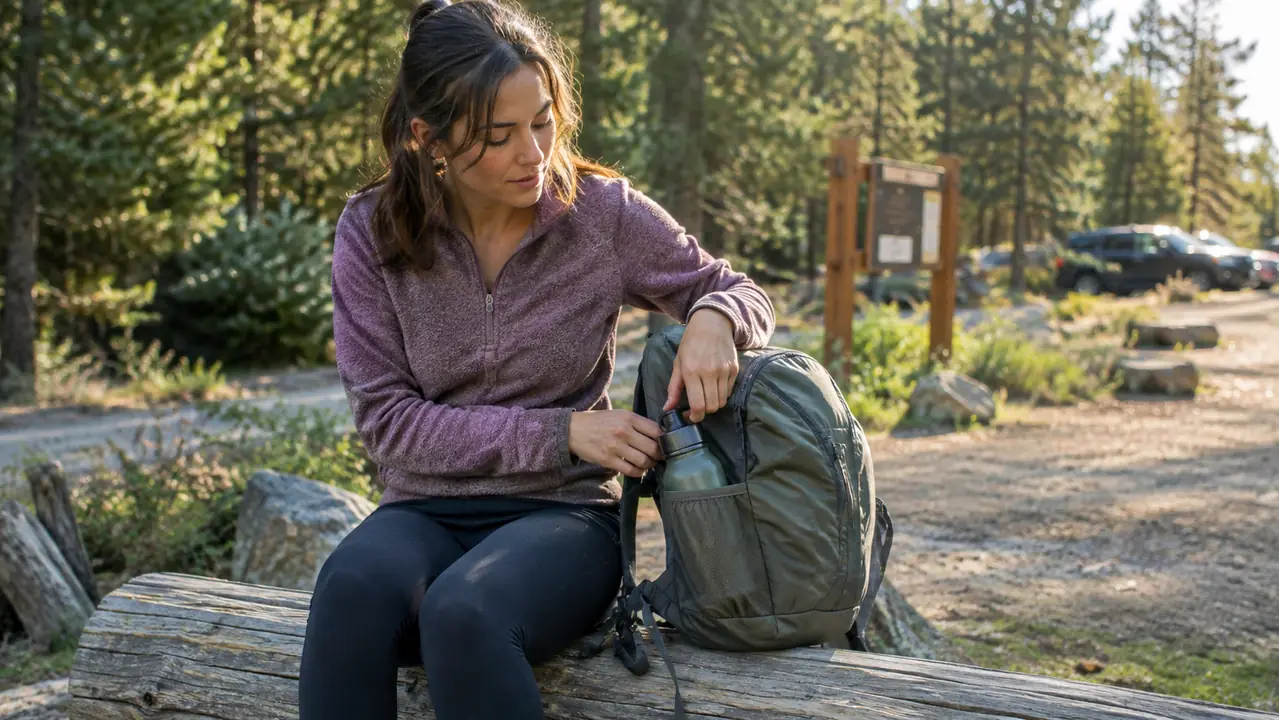
The organization is the best part of the SKYSPER 20L. The main compartment opens wide enough to see everything inside, which sounds obvious but is rare in a pack this size. The front pocket holds my phone, keys, and a small first aid kit without turning into a black hole. The two mesh side pockets hold a 1L water bottle on each side, and they are deep enough that the bottles do not fall out when I bend over. I tested that on a trail where I had to duck under a fallen tree, and both bottles stayed put.
The hidden pocket on the back panel is where I keep my phone and passport when I travel. It sits against your back, so it is hard for someone to open it without you noticing. On the flight to Portland, I kept my boarding pass and ID there and never worried about it. The pocket is not huge, but it is big enough for a phone, a passport, and a folded boarding pass, which is all I need.
The pack is also light. It weighs about 1.3 pounds, which matters when you are carrying it for six hours. And it compresses down small enough to stuff into a suitcase for the return trip, which is exactly what I did after the Portland flight. I folded it into the bottom of my carry-on, and it took up about as much space as a rolled-up sweater.
One small detail I did not expect to like is the padded top handle. I lift the pack out of the Outback by it almost every time, and it is comfortable even with 11 pounds inside.
What I Don't Like
The fabric is the biggest compromise. The SKYSPER 20L is made of a lightweight nylon that feels a little thin compared to packs that cost twice as much. After six months of normal use, mine has no tears, but I would not want to drag it across granite or push it through a rock chimney. It is a trail pack, not a climbing pack. On a scramble near the Sawtooths, I took it off and carried it by the top handle rather than risk scraping it over a ledge.
The rain resistance is also just okay. The pack has a water-repellent coating, and it survived a light shower in the Sawtooths without anything inside getting wet. But I would not trust it in a real downpour. The zippers are not waterproof, and water can find its way in around the top. If you hike somewhere it rains hard, buy a pack cover. I bought a cheap one after the Sawtooth trip, and it lives in the front pocket now.
The zipper pulls are small. With gloves on, they are fiddly. I have big hands for a woman my size, and I struggled to open the front pocket with liner gloves on a cold morning. It is a small thing, but it is the kind of small thing that shows up on every hike. Mark has larger hands than I do, and he had the same complaint when he borrowed the pack to grab something out of the front pocket.
And the sternum strap, while adjustable, does not have a whistle buckle. That is a feature I have gotten used to on other packs, and I miss it when I am hiking alone. I added a small whistle to the zipper pull on the front pocket, which is not as convenient but works.
There is no frame, which is fine under 15 pounds, but I tried carrying 18 pounds once for a long day and the lack of a frame showed. The shoulder straps dug in and the pack sagged away from my back. Keep the load under 15 pounds and this pack is comfortable. Push past that and you will feel every extra pound.
There is no key clip inside the main compartment, so my keys end up at the bottom under everything else. I clip them to the outside of the front pocket instead, which works but is not ideal.
What I Liked
- Fits a short torso out of the box, with a hip belt that actually takes weight
- Well organized: main compartment opens wide, side pockets hold bottles securely
- Light at about 1.3 pounds and compresses small for travel
- Hidden back pocket is handy for travel documents
- Padded shoulder straps and sternum strap hold up over six months
Where It Falls Short
- Lightweight nylon feels thin and scuffs on rock
- No waterproof zippers, so heavy rain needs a pack cover
- Small zipper pulls are fiddly with gloves
- No whistle buckle on the sternum strap
- Back panel sits close to your back, so expect a sweaty back
How It Performed Over Six Months
I have kept a rough log of how the SKYSPER 20L has held up. After 30 hikes, the fabric shows some light scuffing on the bottom where I set it down on granite, but no holes. The zippers still run smooth. The mesh side pockets have not stretched out or torn. The padding in the shoulder straps has not flattened. I checked the stitching around the hip belt after the first month, and again after six months, and there are no loose threads.
The one thing that has worn is the inside of the main compartment, where the hydration hose rubs against the fabric. There is a small patch of wear, but it has not become a hole. I expect to get a couple more years out of this pack at my current pace. I also noticed the sternum strap buckle has a little more play in it than it did in March, but it still clicks closed and holds.
I also washed it once, after a particularly dusty weekend in the desert. I hand washed it in the tub with mild soap, and it dried overnight. The water-repellent coating seemed a little less effective afterward, so I would recommend spot cleaning instead. If I had to do it again, I would just wipe it down with a damp cloth and let the dust settle.
The zippers have been through dust, rain, and being overstuffed on the flight home, and they still close with one hand. That is the kind of thing that separates a pack I keep from one I replace.
Who This Is For
The SKYSPER 20L is for you if you want one small pack that does both day hikes and travel. It is for people who carry 8 to 15 pounds, who want a hip belt that actually works, and who do not want to spend a lot of money on a pack they will use a few times a month.
It is especially good for shorter hikers. If you are 5'2" to 5'7" and every pack you try sits too low, this one is worth a shot. The adjustable sternum strap and the padded hip belt make a real difference at our height.
In May, Mark and I drove to McCall for a weekend and I used the SKYSPER as my only bag. It held a change of clothes, a toiletry kit, a book, and my hiking shoes, and it still fit under the seat on the way home. That trip convinced me this pack is more than a trail bag.
Who Should Skip It
Skip the SKYSPER 20L if you hike in heavy rain or you are hard on your gear. The fabric is light and the zippers are not waterproof, so a serious downpour will test it. If you regularly carry more than 20 pounds, get a pack with a real frame. And if you want a whistle on your sternum strap, you will have to add your own.
I would also skip it if you need a pack for technical terrain. It has no load lifters and no frame, so it is not designed for scrambling or climbing. It is a simple daypack, and it is best at simple day hikes.
The pack does not stand up on its own when it is empty. It flops over, which is annoying when you are trying to load it on a tailgate. A full pack stands fine, so this only matters at the start of a trip.
If you are the kind of hiker who regularly drops your pack on sharp rock or pushes through brush, the lightweight fabric will bother you. I am careful with my gear and I still have scuffs. Someone rougher on equipment would want a tougher shell.
The bottom line on the SKYSPER 20L
After six months and 30 hikes, I still reach for the SKYSPER 20L more than any other pack I own. It is comfortable, organized, and light, and the compromises are ones I can live with. If that sounds like your kind of daypack, check today's price on Amazon.
Amazon Check Today's Price on Amazon →