
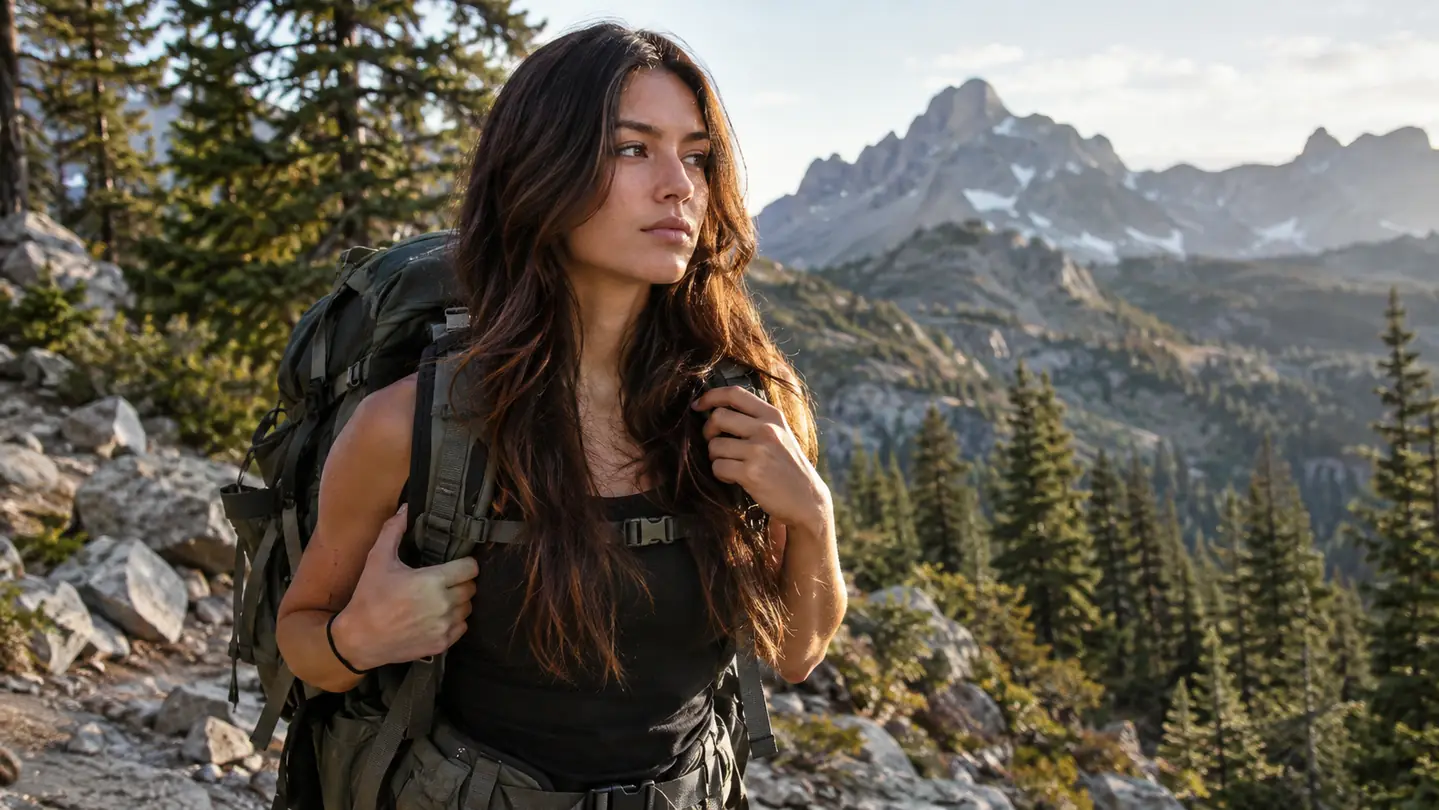
I spent four months carrying the TETON Explorer 65L, TETON Sports' big internal-frame pack, on Sawtooth weekends, Boise foothill nights, and one week of travel where it was my only bag. I am 5'6" with a short torso, I have a left knee I have to manage on long descents, and I have learned to be suspicious of any pack that promises everything for a fraction of what the big names charge. So I want to be clear up front: this pack is genuinely good, and it is also genuinely heavy. Those two things are both true, and which one matters to you depends on what you carry and how far you carry it.
The Quick Verdict
A sturdy, comfortable, feature-packed 65-liter pack that is the best value I have tested for weekend trips and budget-conscious hikers, as long as you can live with the 5-plus-pound weight and are willing to do a little load tuning.
Amazon Check Today's Price →A 65L pack that carried a full Sawtooth weekend without complaint
After months of real trail use, the TETON Explorer 65L is my pick for hikers who want one solid pack that does not cost a fortune. Check today's price on Amazon and see if it fits your next trip.
Amazon Check Today's Price on Amazon →How I've Used It
I bought the TETON Explorer 65L in early spring, right before the snow melted off the lower Sawtooth trails. My usual routine is a weeknight hike in the Boise foothills with a light load, and a bigger trip most weekends when Mark and I can get out of town. The TETON Sports Explorer became my overnight pack for both. I loaded it with a 2-person tent, two sleeping bags, a stove, food for two nights, a 3-liter water bladder, and the usual rain layers and first aid kit. That is roughly a 30 to 35 pound starting weight, which is a realistic load for this pack.
I also flew with it twice. It is far too big for a carry-on, so both times it went in the checked bags inside a cheap duffel, and on a week-long trip it was my only checked bag. On the trail, I have carried it over granite slabs, through a thunderstorm near Stanley, and down a long switchback descent that made my left knee complain. That last one matters, because the pack's suspension has to do a lot of the work on the way down.
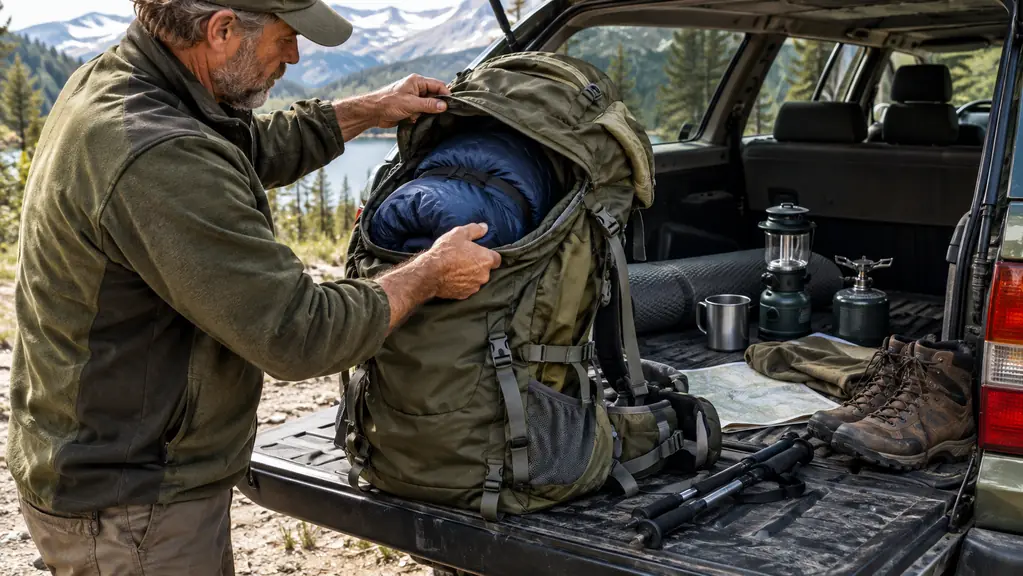
The trip that taught me the most was a two-night loop into the Bench Lakes in late June. We loaded the pack into the back of our older Subaru Outback on a Friday afternoon and drove up to the trailhead. I had the pack loaded heavier than I normally would, about 36 pounds, because we were carrying extra fuel and a water filter for the group. The first mile climbs through lodgepole pine and then opens onto granite slabs that run for what feels like forever. I remember thinking on the way up that the pack was handling the weight better than I expected. On the way down two days later, with the load lighter and my knee starting to complain, I was grateful for the hip belt, because it let me shift almost all of the weight off my legs and onto my hips on the steepest switchbacks.
Fit and Suspension: Short Torso Friendly, With Some Tuning
The first thing I checked was the torso adjustment. I have a short torso, and a lot of budget packs sit too low or put the hip belt at the wrong angle. The TETON Sports Explorer 65L has an adjustable torso system that runs from about 15 to 21 inches, and I was able to get a solid fit without any modification. That alone puts it ahead of several cheaper packs I have tried, where the shoulder straps never quite sat right.
The hip belt is where the pack earns its keep. It is padded, wide, and wraps around my hips in a way that transfers most of the load off my shoulders. On a 6-mile climb with a 32-pound load, my shoulders stayed comfortable the whole way. The sternum strap has a whistle built in, which I used once when Mark and I got separated near a ridge. It is a small detail, but it is the kind of detail that makes this pack feel thought out.
The tradeoff is weight. The TETON Explorer 65L comes in around 5 pounds empty, which is heavy by modern standards. A comparable ultralight pack will save you two pounds or more, and you feel those two pounds on a 10-mile day. I noticed it most on the climb out of a valley near Redfish Lake. The pack was comfortable, but it was not invisible. If you are counting ounces, this is not the pack for you. If you are counting dollars, the math changes.
Getting the fit right took one adjustment session in my living room and then a real correction on the trail. I started with the load lifters too loose, because the pack felt fine standing still. On the first climb, the shoulder straps kept sliding forward and I was fighting the pack instead of hiking. I stopped at the first flat spot, pulled the load lifter straps until the top of the pack leaned slightly into my upper back, and re-tightened the sternum strap so it sat just below my collarbone. That fixed it. The difference was immediate enough that I now check those two straps every time I put the pack on. If you buy this pack, plan on a few minutes of tuning before your first real trip.
Storage and Organization: Pockets That Actually Make Sense
The TETON Explorer 65L has a main compartment, a sleeping bag compartment with a divider, a large front pocket, two side pockets, a small top pocket, and an expandable collar. I am picky about organization, and this is the first pack in its price range where every pocket has a clear job. The front pocket is big enough for a rain jacket and a map, and it is easy to reach without taking the pack off. The side pockets hold a 1-liter bottle each, and they are deep enough that nothing fell out when I bent over to pick up a dropped trekking pole.
The sleeping bag compartment is a genuine feature, not a gimmick. I could access my sleeping bag without unpacking everything else, which saved me from a cold, frustrated fumble on the first night of a trip. The divider between the main compartment and the sleeping bag area can be unzipped if you want one big space, which is nice when I am carrying a bulky tent instead of a bag. The expandable collar added about 6 inches of space when I needed to stash a puffy jacket on the outside of the main load.
One thing I will flag: the top pocket is smaller than it looks. It fit my keys, a headlamp, a small first aid kit, and a snack, but not much more. I would have liked a little more room there for sunglasses and a camera. It is not a dealbreaker, but it is worth knowing before you pack.
My standard load for a two-night trip puts the sleeping bag in the bottom compartment, the tent in the main compartment standing upright against the divider, and the stove and food in a stuff sack on top. The front pocket holds my rain jacket and a paper map, and I keep a 1-liter bottle in each side pocket so I do not have to stop to drink. On the Bench Lakes trip, I had to repack at the trailhead because I had left the tent poles in the front pocket, which threw the whole balance off. It took me about ten minutes to redo it, and once the heavy items were back against my spine, the pack rode noticeably better. That is the kind of feedback this pack gives you: when you load it right, you can feel it.
On the Trail: Comfort, Stability, and a Rainy Day
On the trail, the TETON Explorer 65L is stable. The load stays close to my back, and I did not feel like I was being pulled backward on steep sections. The compression straps on the sides do a good job of keeping the pack from shifting when it is only half full. I took it on a 4-mile evening hike in the foothills with just a jacket, water, and a snack, and it still felt balanced, which is not true of every big pack I have tried.
The rain cover is a big part of why I trust this pack in bad weather. It is stowed in a small pocket at the bottom of the pack, and it is easy to deploy even with cold, wet hands. I used it during a thunderstorm near Stanley, and everything inside stayed dry. The pack itself is not fully waterproof, so the rain cover is not optional if you are hiking somewhere with serious weather. I also like that the cover is a bright color, which makes the pack easier to spot if you set it down in the trees.
The Stanley storm is worth describing in detail, because it is the closest thing to a worst case I have put this pack through. We were about two miles from the car on the Alpine Way trail when the sky went from clear to dark in under ten minutes. The wind picked up, and the first few drops hit while I was still pulling the rain cover out of its pocket. I got it over the pack about thirty seconds before the real rain started, and it stayed put for the next hour, through wind and a stretch of exposed granite where there was nowhere to take cover. When we got back to the car, I opened the main compartment and the sleeping bag compartment, and both were dry. That is the test that matters, and the TETON Sports pack passed it.
The rain cover went on in thirty seconds, and both compartments stayed dry through an hour of storm. That is the test that matters.
How It Held Up Over Months of Use
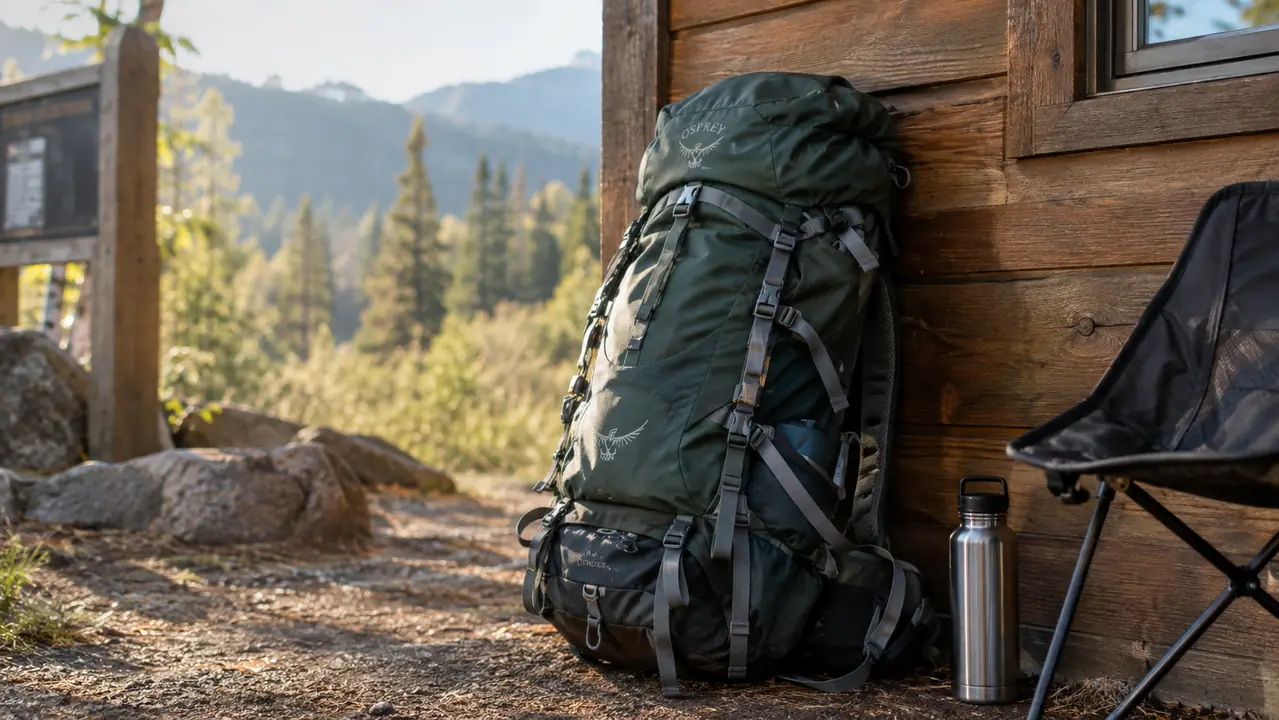
After four months of regular use, the TETON Explorer 65L shows only minor signs of wear. The zippers still run smoothly, the stitching on the shoulder straps is intact, and the hip belt padding has not flattened. I have dragged it over granite, dropped it on gravel, and sent it through airline baggage handling twice. The only real wear I can find is a small scuff on the bottom panel, which is cosmetic and expected.
The one thing I would change is the weight. At around 5 pounds, the TETON Explorer 65L is heavier than I would like for long trips, and I noticed it on a 10-mile day with a full load. That is the tradeoff for the price and the durability. The pack is built to last, and it feels like it. If TETON Sports ever releases a lighter version of this pack, I would buy it without hesitation. As it is, I reach for the Explorer when I want a pack I do not have to baby, and I accept the extra weight as the cost of that freedom.
I did a more careful inspection before writing this review, because four months is long enough for the weak points to show themselves. The two spots I checked hardest were the seams where the shoulder straps meet the pack body and the stitching around the hip belt buckle, because those are the first things to fail on a cheap pack. Both are still tight. The zipper on the sleeping bag compartment, which gets the most use on my trips, has not skipped once. The frame sheet inside is still straight, and the aluminum stays have not bent, which surprised me given how many times I have dropped the pack onto rocks while taking it off. I also washed the hip belt and shoulder straps after a muddy trip in May, and the padding came through the wash without clumping.
What I Liked
- Comfortable, padded hip belt that transfers weight well
- Adjustable torso fits a wide range of body sizes, including short torsos
- Real sleeping bag compartment with a divider you can unzip
- Included rain cover that actually works
- Durable construction that holds up to rough use
- Outstanding value for the price
Where It Falls Short
- Heavy at around 5 pounds empty
- Top pocket is smaller than it looks
- Not fully waterproof without the rain cover
- Suspension takes some tuning to get the fit just right
Who This Is For
The TETON Explorer 65L is for hikers who want one pack that does everything without the big-name price. It is ideal for weekend trips, beginner backpackers, and anyone who carries a tent and a sleeping bag and does not count every ounce. If you are looking for a first overnight pack, this is a strong choice, because it is comfortable enough to learn on and durable enough to keep for years. It is also a good option for tall hikers with long torsos, since the adjustable system covers a wide range. And if you hike with a partner and split the gear, the extra 10 liters over a 55-liter pack gives you room to take the tent and the stove without playing a game of where-does-this-go.
Who Should Skip It
Skip the TETON Explorer 65L if you are an ultralight hiker, a thru-hiker counting every ounce, or someone who wants the lightest possible pack for long distances. At around 5 pounds, it will feel heavy on a 20-mile day. Skip it if you prefer a pack with a more minimal look, or if you need a pack you can take on a plane as a carry-on. At 65 liters, this one has to be checked. And if you only hike once or twice a year, a smaller, lighter pack might serve you better. The Explorer is a lot of pack, and it is happiest when it is full and on a trail.
Months of trail use, one honest verdict
The TETON Explorer 65L has been my go-to overnight pack for months. It is comfortable, well-organized, and built to take a beating. Check today's price on Amazon to see if it is right for your next trip.
Amazon Check Today's Price on Amazon →