
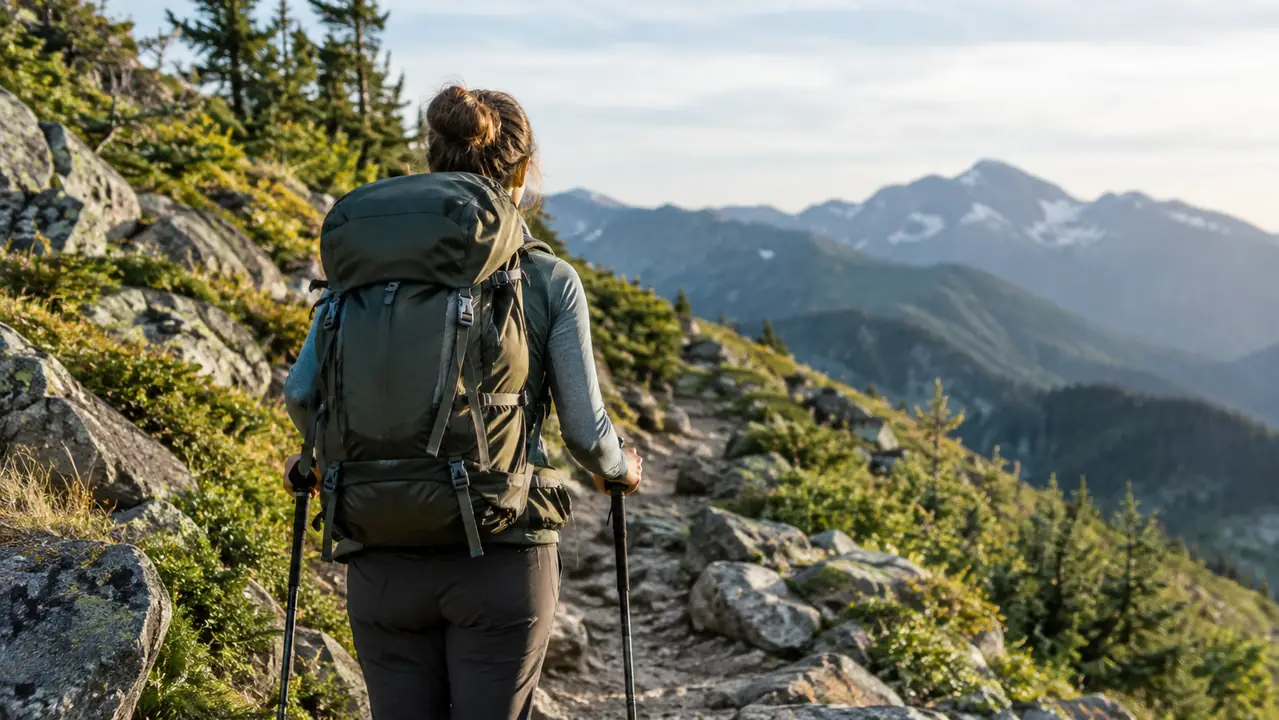
I spent my first few years of backpacking with a soft-sided sack that had no frame at all. It weighed almost nothing on the shelf and felt fine for a day hike. The first time I took it on an overnight, I learned why frame packs exist. By mile four, the load had settled into a sagging lump at my lower back, and by the time we made camp my shoulders were done.
That trip is why I now tell anyone starting overnights to look at an internal frame pack before they buy anything else. The pack I have used most often this season is the TETON Sports 65L Explorer. It is not the lightest or the most expensive pack on the trail, but it does the job a frame is supposed to do: it keeps the weight on your hips, where your legs can carry it.
A frame pack that carries its weight
The TETON Sports 65L Explorer has carried me through a dozen overnight trips this year. Check today's price on Amazon and see if it fits your load.
Amazon Check Today's Price on Amazon →Ten reasons the frame wins
I have used frameless sacks, cheap external frame packs, and a few internal frame packs over the last fifteen years. The pattern is consistent. On an overnight trip, the internal frame does more for comfort than any other single feature. Here are the ten reasons, in the order I notice them on the trail.
Weight rides on your hips, not your shoulders
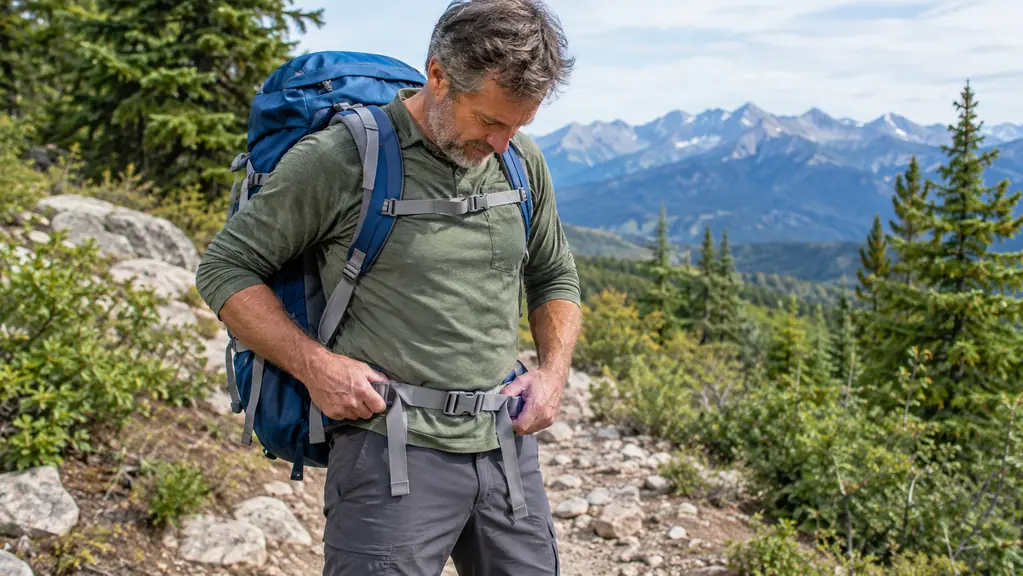
A budget sack transfers most of the load to your shoulder straps. An internal frame, with its metal stays and padded hip belt, does the opposite. When I tightened the TETON Sports Explorer's belt over my hip bones, I could feel the difference in the first hundred yards. My shoulders stayed loose for the whole climb. For anyone with a history of neck or shoulder trouble, that alone is worth the upgrade.
The load stops shifting when you bend
With a frameless sack, every time I leaned forward to step over a log, the whole bag slid to one side. The internal frame holds the load close to your back and keeps it in place. I noticed this most on the steep descent into the Sawtooths last month. My water filter and cook kit stayed exactly where I packed them, even when I was scrambling on all fours.
You can carry a bear canister without pain
A bear canister is a rigid, heavy cylinder and it is the worst thing to carry in a floppy sack. It digs into your spine and shifts with every step. The internal frame spreads that weight across the whole structure. I carried a canister for a week in the Sawtooths and only felt it when I had to lift the pack into the car. That is a win.
Your back gets airflow instead of a sweaty slab
Frameless packs lie flat against your back. After an hour of climbing, I would have a wet shirt from shoulder to waist. The Explorer's frame creates a channel between the mesh and your back, so air can move. It is not magical, but it is noticeably cooler on a 75 degree afternoon. That matters more than it sounds when you are hiking for six hours.
You can tighten it for rough terrain
Internal frame packs have load lifter straps and compression straps that a budget sack simply does not have. When the trail got rough, I pulled the load lifters and the pack sat higher and tighter. It felt less like a bag on my back and more like part of my body. That stability is what lets you move faster on rocky sections.
It carries a sleeping bag and tent without turning into a tube
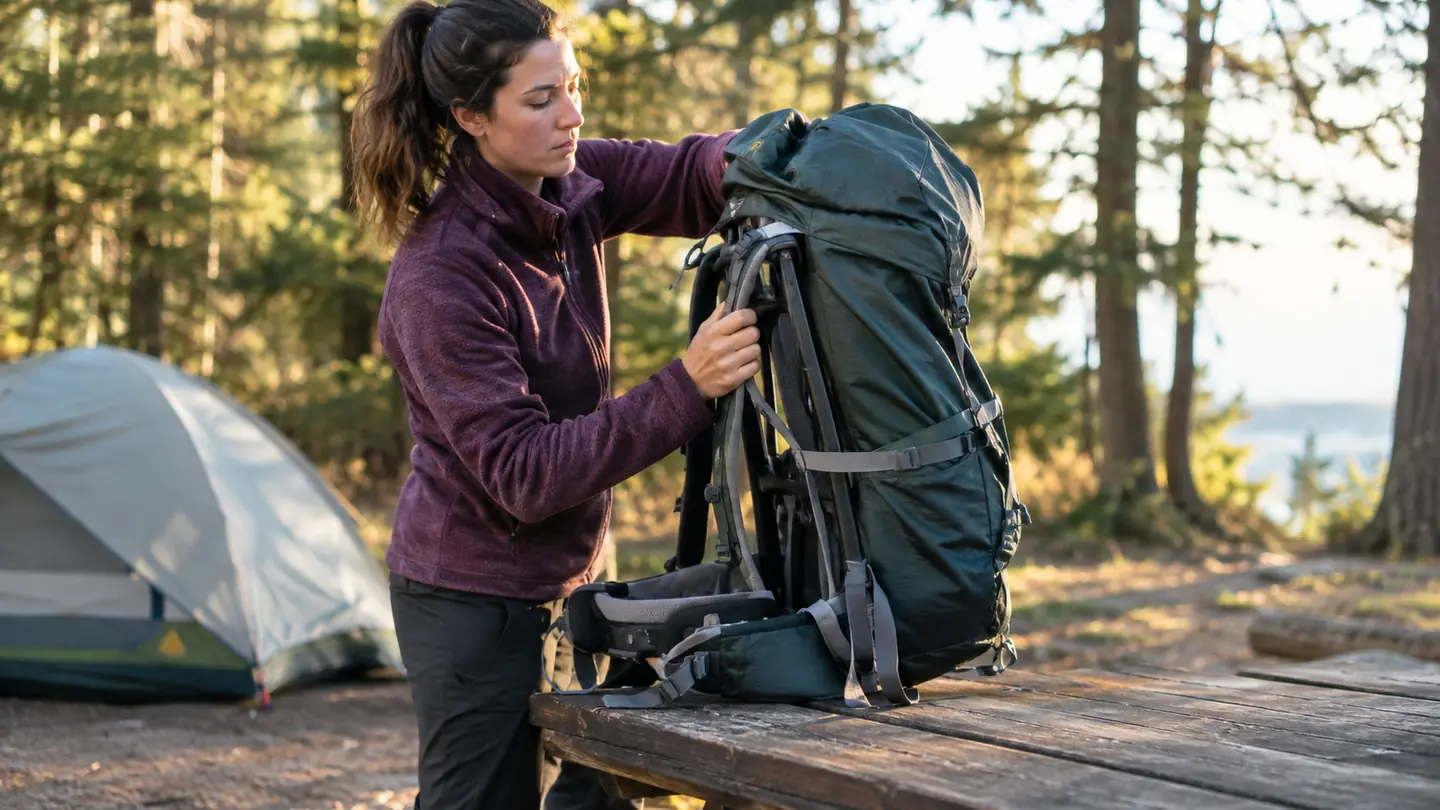
A frameless sack full of soft gear becomes a long, sagging tube that pulls backward. The internal frame keeps the pack's shape, so a sleeping bag in the bottom compartment and a tent strapped to the side stay put. I packed the Explorer for a three-day trip and it looked the same on day three as it did on day one. No re-packing at every break.
You can adjust the torso length to fit
I am 5'6" with a short torso, and most budget sacks hang wrong. The Explorer has an adjustable torso system, so I set it to my length in about two minutes. That fit is what makes the hip belt land in the right place. A pack that fits correctly carries weight better than a pack that is technically lighter but sits too low.
It makes water crossings less scary
When you cross a stream, the last thing you want is a load that swings when you step on a wet rock. The internal frame keeps the center of mass steady. I crossed a knee-deep river in the Sawtooths this spring and the pack stayed balanced the whole way. I still used a trekking pole, but I did not feel the pack trying to pull me sideways.
You can lash gear on the outside when needed
Internal frame packs come with daisy chains, compression straps, and loops for gear you cannot fit inside. On a cold trip, I strapped my sleeping pad to the outside and still had room for a puffy jacket. A budget sack usually has nothing to lash to, so you are stuck leaving gear behind or strapping it awkwardly to the top.
It lasts through years of weekend trips
The TETON Sports Explorer has been on every overnight trip I have taken this year, and the frame, zippers, and straps still feel solid. A cheap sack might survive a season or two, but the stitching and buckles are the first to go. If you hike as often as I do, the per-trip cost of a framed pack ends up lower than replacing a budget sack every year.
What I'd Skip
I would skip the internal frame pack if you only do day hikes with a light load, or if you are trying to save every possible ounce for a thru-hike. For those trips, a frameless day pack or an ultralight pack is a better tool. But for a standard overnight with a tent, sleeping bag, food, and water, the frame is worth the extra weight. It is also worth skipping the TETON Sports Explorer if you need a pack larger than 65 liters or if you want a fully waterproof pack. This one has a rain cover, but it is not a dry bag.
The internal frame did more for my comfort on overnight trips than any other single piece of gear I have changed in the last five years.
I still own a cheap day pack for short hikes, and I am not saying every overnight requires a 65 liter framed pack. But if you are carrying more than about fifteen pounds, your body will thank you for putting a frame under it. My left knee is picky on long descents, and the Explorer's stable carry means I am not fighting the pack on the way down. That alone has made my weekend trips more enjoyable. If you want more detail on how the Explorer holds up over a full season, read my [long-term review](/teton-explorer-65l-review-long-term). If you are comparing it to a more expensive pack, the [head-to-head comparison](/teton-explorer-65l-vs-osprey-backpacking-pack) covers the differences.
Ready to leave the budget sack behind?
The TETON Sports 65L Explorer has handled everything I have thrown at it this year. Check today's price on Amazon and see if it fits your next overnight trip.
Amazon Check Today's Price on Amazon →