
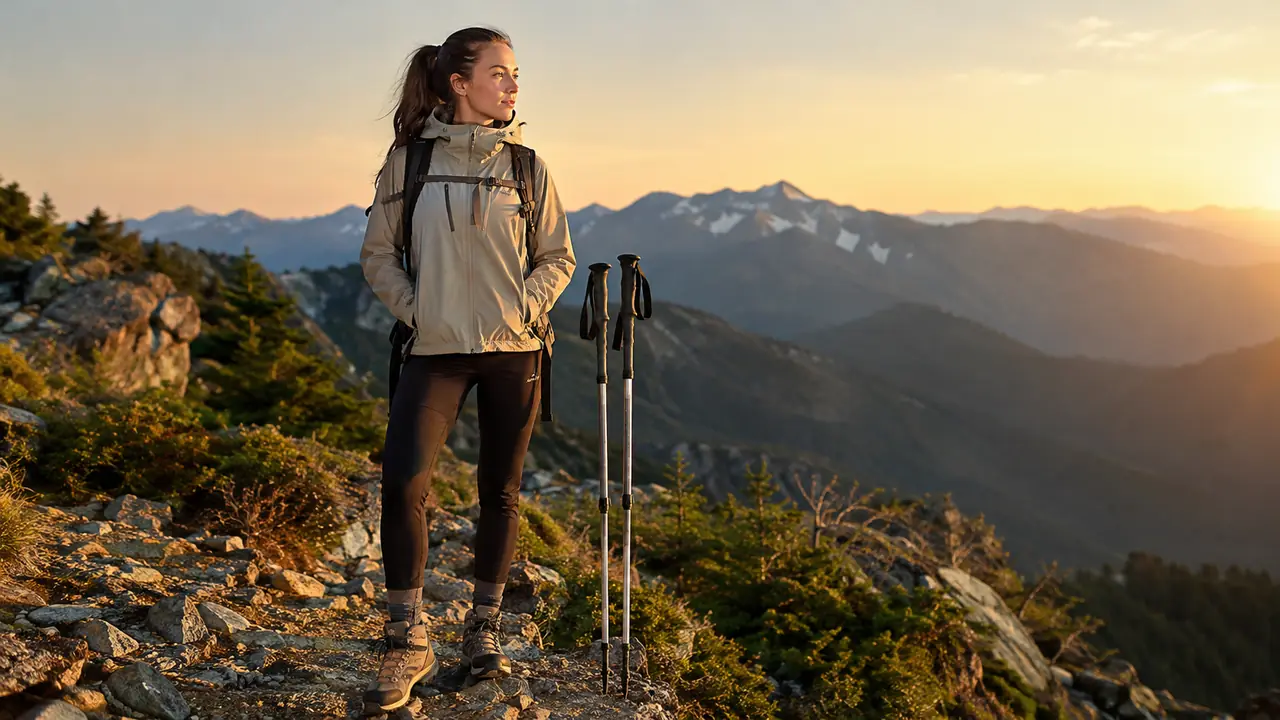
I bought my first pair of Cascade Mountain Tech trekking poles in early spring, mostly because my left knee started complaining on every long descent. Fifteen years of weekend hiking in the Boise foothills and the Sawtooths had finally caught up with me. I am 5'6", I have a short torso, and I needed help going downhill, not more weight in my hands. These poles have now been on weeknight foothill loops, full Sawtooth weekends, and a couple of trips where they flew in a checked bag. Here is what months of real use actually look like.
The short version: the Cascade Mountain Tech aluminum poles are not the lightest or the fanciest poles you can buy. They are the poles I keep reaching for anyway, because they are comfortable, adjustable, and tough enough for the way most people actually hike.
The Quick Verdict
A durable, comfortable, genuinely adjustable pole that does the job for most hikers at a price that leaves room for better boots. The locking mechanism needs occasional attention, and the baskets are not built for deep snow, but for ordinary trail use these are easy to recommend.
Amazon Check Today's Price →Your knees will thank you on the next descent
After months of testing, the Cascade Mountain Tech trekking poles are still the pair I grab first. Check today's price on Amazon and see if they fit your trail style.
Amazon Check Today's Price on Amazon →How I've Used It
I have used these poles at least once a week since they arrived. That includes a 14-mile loop in the Sawtooths with 3,200 feet of elevation gain, a wet spring weekend where the trail never dried out, and countless shorter evenings in the foothills behind Boise. My husband Mark and I usually hike together, and he has borrowed them on a few rocky sections when his own poles were in the car. They have been rained on, caked in mud, stuffed diagonally into the back of our older Subaru Outback, and flown in a checked duffel twice. The 14-mile loop was in late June, and we started in a cold morning with snow patches still melting across the upper trail. By early afternoon the sun was hot and the last miles were dry and dusty. The poles went from planted in soft, wet snow to planted on bare rock within a few hours, and I never had to adjust the length for the changing ground. The wet spring weekend came in April. It rained on us for most of Saturday, and by Sunday the trail was a running stream in places. I did not worry about the aluminum shafts in that weather, and I did not have to. The twist locks never seized, even after a full day of wet, muddy use.
For the descents, I set them a bit long and let them take the shock that my left knee used to absorb. For climbs, I shorten them and use them as a gentle push. On flat sections I often collapse them and carry them in one hand. That range of adjustment is the whole reason I bought them, and it is the reason they still get used instead of sitting in the garage. The difference between a good pole and a useless one is often just a few inches of length. When the length is right, I do not think about the poles at all. When it is wrong, I notice it on the first step.
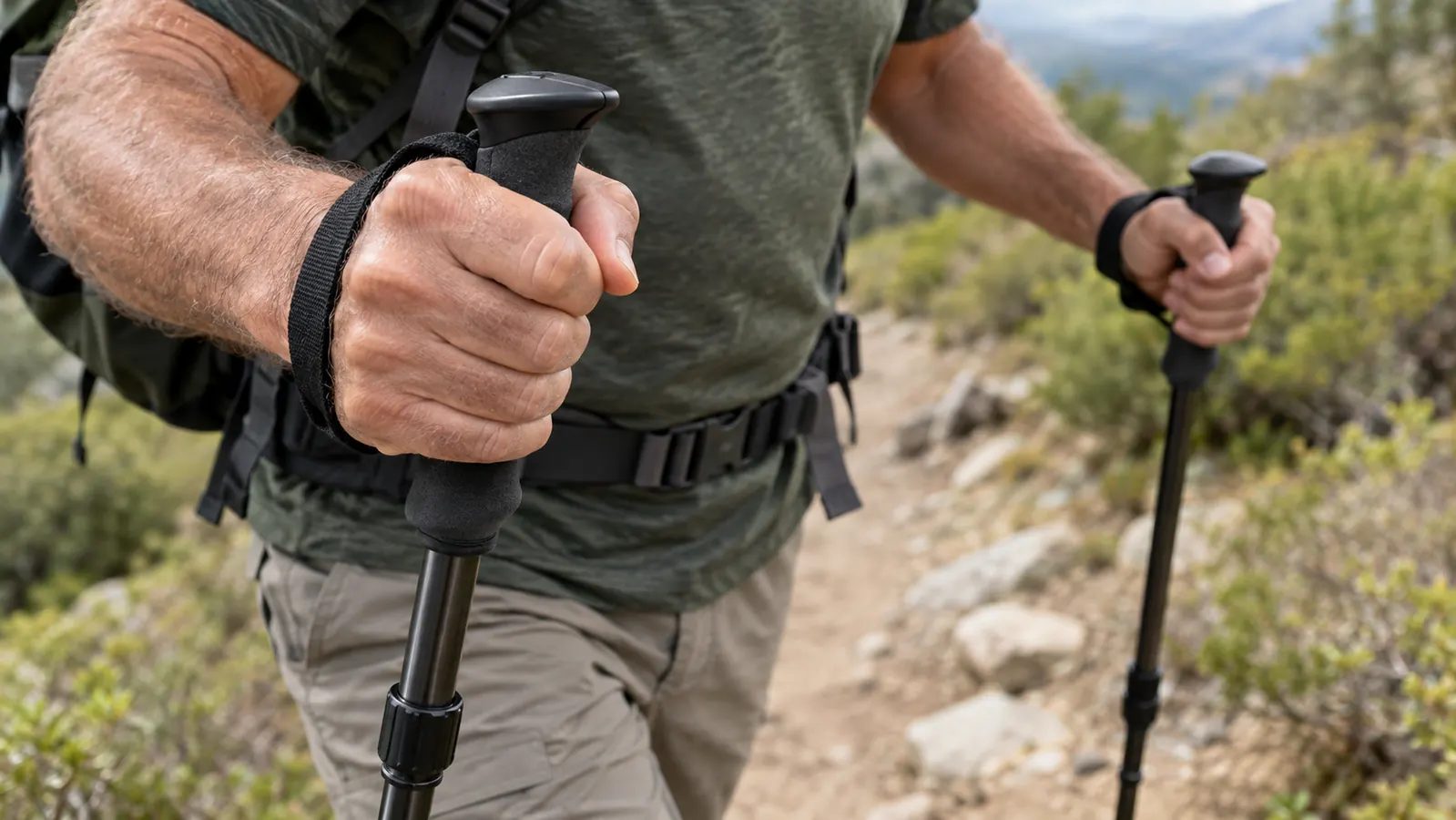
I am a physical therapy assistant, so I notice things like wrist angle and grip pressure. The extended foam grip on these poles runs down the shaft far enough that I can choke up on steep climbs without my hand slipping onto bare metal. That detail matters more to me than a few ounces of weight.
The flying trips taught me something about the three-piece design. Fully collapsed, the poles are short enough to slide diagonally into a small checked duffel next to my overnight pack, and they came through baggage handling without damage. Poles are generally not allowed through security in a carry-on, so that duffel is the price of bringing them. The twist collars did not loosen in transit, which was my main worry. I have had cheaper twist-lock poles arrive with the sections fully separated. These stayed put.
What You Get for the Money
The Cascade Mountain Tech trekking poles are made from 7075 aluminum, which is the same alloy a lot of backpacking tents use for their poles. That means they bend before they break, and on a rocky trail I would rather have a bend I can straighten than a carbon shaft that snaps. They are not ultralight. Each pole weighs a little over a pound, and if you are counting grams for a thru-hike, these are not the poles for you. For a day hike or a weekend trip, the weight is a fair trade for the durability. On a ten-mile day I do not notice the extra ounces. What I do notice is the way the poles feel planted and solid when I put my weight on them.
The locking mechanism is a twist lock. You twist the collar to loosen it, slide the shaft to your height, and twist it back to tighten. It works well when you remember to tighten it firmly. I have had the lower section slip once or twice on a long descent, usually because I was in a hurry and did not crank it down hard enough. It takes about two seconds to fix, and it has never failed completely. The first slip happened near the end of a long day, about an hour after I had shortened the pole for a climb. I had not tightened the collar back down with enough force, and the lower section slid down a couple of inches on the next plant. I stopped, gave the collar a proper crank, and it held for the rest of the day. Now I check both collars every time I stop for water, and the problem has mostly disappeared.
The grips are the standout feature. The foam extends well below the handle, which is rare at this price. On a steep climb I can slide my hand down and still have cushion under my palm. The wrist straps are padded and easy to adjust, even with gloves on. I have used these straps in cold weather with thick gloves and in warm weather with bare hands, and they hold the same way in both. The baskets are small and fine for summer trails, but they are not made for deep snow. If you want to use these in winter powder, plan to swap in bigger baskets or buy a dedicated snow basket set.
How They Perform on Real Trails
On the descents that originally made me buy them, these poles do exactly what I need. I set them long, plant them slightly ahead of my feet, and let my arms take the load that my left knee used to carry. After a 14-mile day with 3,200 feet of descent, my knee felt the way it used to feel after a much shorter hike. That is the whole point, and it works. The day that convinced me was that late June loop. We climbed for most of the morning, ate lunch on a ridge, and then faced a descent that dropped about 2,000 feet in roughly two miles. In the past, that kind of descent would have had me favoring my left leg by the bottom. With the poles set long and planted ahead of me, I came off the mountain tired but without the sharp ache that usually showed up in my knee. That is a different thing entirely.
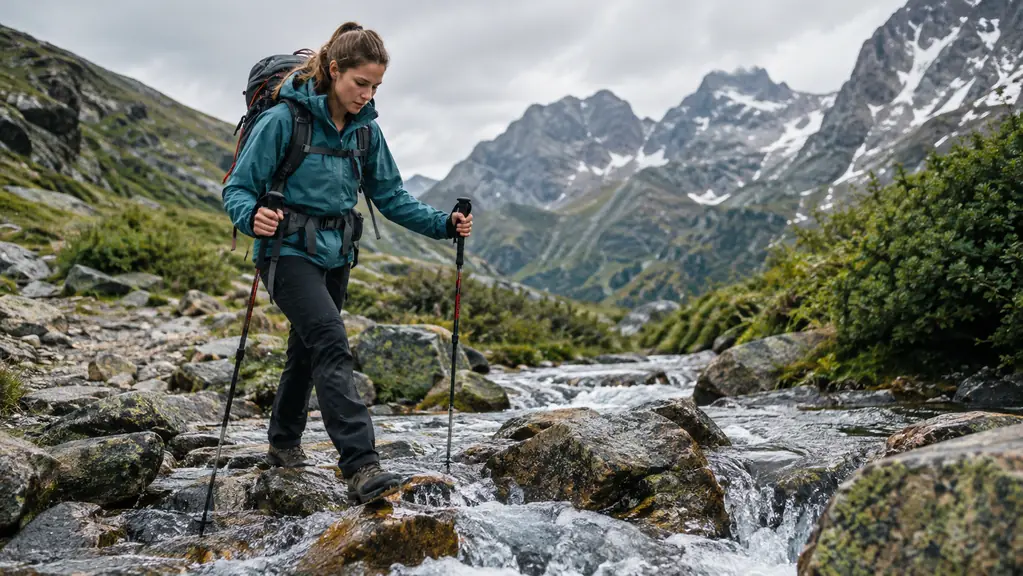
On climbs, the adjustable length is the difference between a useful tool and a nuisance. I shorten the poles by several inches for steep sections, and the extended foam grip means I can choke up without losing cushion. On the flatter sections I collapse them and carry them, and the twist locks make that quick enough that I actually do it instead of just carrying the poles fully extended. One morning we crossed a rocky stream where the trail disappeared under the water. I planted both poles downstream of my feet and used them as extra legs. The carbide tips held on the wet rock without skittering, and the baskets did not drag. That is the kind of moment where a cheap pole shows its weakness, and these did not.
The carbide tips have held up well. After months of use on rocky trails, they show normal wear but no breakage. The tips are replaceable, which matters if you hike a lot of talus. The baskets have taken some abuse on rocky ground and are still intact, though they are clearly the weakest part of the design.
After a 14-mile day with 3,200 feet of descent, my knee felt the way it used to feel after a much shorter hike. That is the whole point, and it works.
What Wears Out and What Doesn't
After months of regular use, the honest answer is that very little has worn out. The foam grips still look good and have not compressed in the spots where my hands rest. The twist locks still hold firmly when I remember to tighten them properly. The shafts have a few scratches and one small dent from a fall on talus, but the poles are still straight and the dent has not affected the locking mechanism. The dent came from a fall in July on a talus slope. I went down on my left side and the pole took my weight on the way down. I expected it to bend. Instead it came up with a dent and a scratch about two inches long, and the shaft stayed straight when I rolled it on the ground. I have used the pole every weekend since.
The one thing I would change is the baskets. They are small and they spin a little on the shaft, which is normal for this style of basket, but it means they are not great in soft ground or snow. For summer trail use they are fine. For winter use, plan to swap them out. On one muddy section last spring I pushed a pole in and it sank almost to the basket. That is not a failure. It is a limit of the design, and knowing it means I do not rely on the poles in soft ground.
The other thing to know is that the twist locks need a firm hand. If you are the kind of person who barely tightens things, you will occasionally have a pole collapse on you mid-hike. It is not a defect. It is a design that requires a deliberate twist. Once I learned to give them a solid crank, the problem mostly disappeared.
What I Liked
- Extended foam grip lets you choke up on steep climbs without losing cushion
- 7075 aluminum bends rather than snaps on rocky trails
- Genuinely adjustable length range for descents, climbs, and flat ground
- Replaceable carbide tips held up through months of talus and rock
- Padded wrist straps are easy to adjust, even with gloves on
Where It Falls Short
- Twist locks slip if you do not tighten them firmly
- Small baskets are not built for deep snow or soft ground
- A little over a pound per pole, so not ultralight
- The lower shaft dented on a hard fall, though it still works
Who This Is For
These poles are for the hiker who wants one pair of poles that works for day hikes, weekend trips, and the occasional flight to a trailhead. They are for people who hike on rocky trails where a carbon shaft might not survive a fall. They are for anyone with knees that complain on descents, because the adjustable length and the comfortable grip make it easy to actually use them on every downhill section. They are also for someone like me, a hiker who does not want to think about gear on the trail. These poles disappear into the hike, which is the highest compliment I can give a piece of equipment. If you are a weekend hiker who wants solid gear without spending a fortune, the Cascade Mountain Tech trekking poles are a very easy recommendation.
Who Should Skip It
Skip these if you are a thru-hiker counting every ounce, because there are lighter carbon options that cost more and save real weight over a thousand miles. Skip them if you hike mostly in deep snow, because the baskets are not up to that job. And skip them if you hate twist locks, because no amount of durability will make up for a locking system you do not trust. If you already own a pair of twist-lock poles that you like, keep them. These are a well-made version of a familiar design, not a reason to spend money you do not need to spend. For everyone else, these are a solid, honest pair of poles.
The poles I still grab first after months of trails
The Cascade Mountain Tech trekking poles have earned their place in my gear closet. If you want a durable, comfortable pair for real trail use, check today's price on Amazon.
Amazon Check Today's Price on Amazon →