
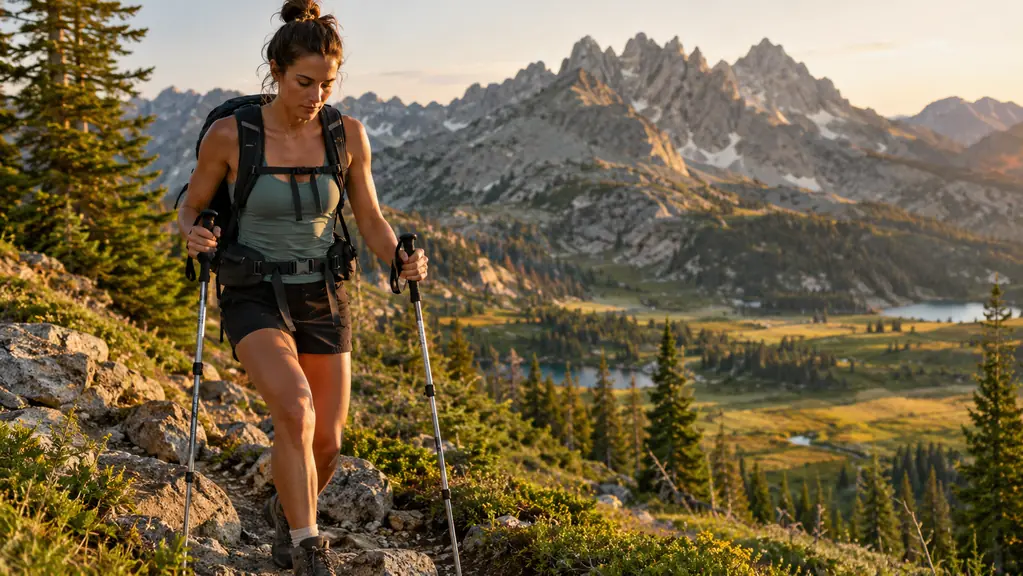
I used to dread the downhill part of a hike. Not the climb. The climb I can handle. It is the descent that makes my left knee talk back, especially after mile eight on a rocky grade. I work as a physical therapy assistant, so I know exactly what my knee is doing when it starts to ache. That knowledge does not make the ache easier to ignore.
For years I told myself the answer was stronger legs and better shoes. I did the single-leg squats. I bought trail runners with more cushion. I shortened my stride on the way down. All of it helped a little. None of it fixed the real problem, which was that every step downhill was a controlled fall, and my knee was doing all the braking.
Then my husband Mark and I spent a long weekend in the Sawtooths. We had a steep, loose descent planned, and I finally borrowed a pair of trekking poles from a friend. By the bottom, my knee felt like it had done a normal hike, not a demolition derby. I ordered my own set that week. I went with Cascade Mountain Tech because they were light, simple, and did not cost what some of the carbon sets cost.
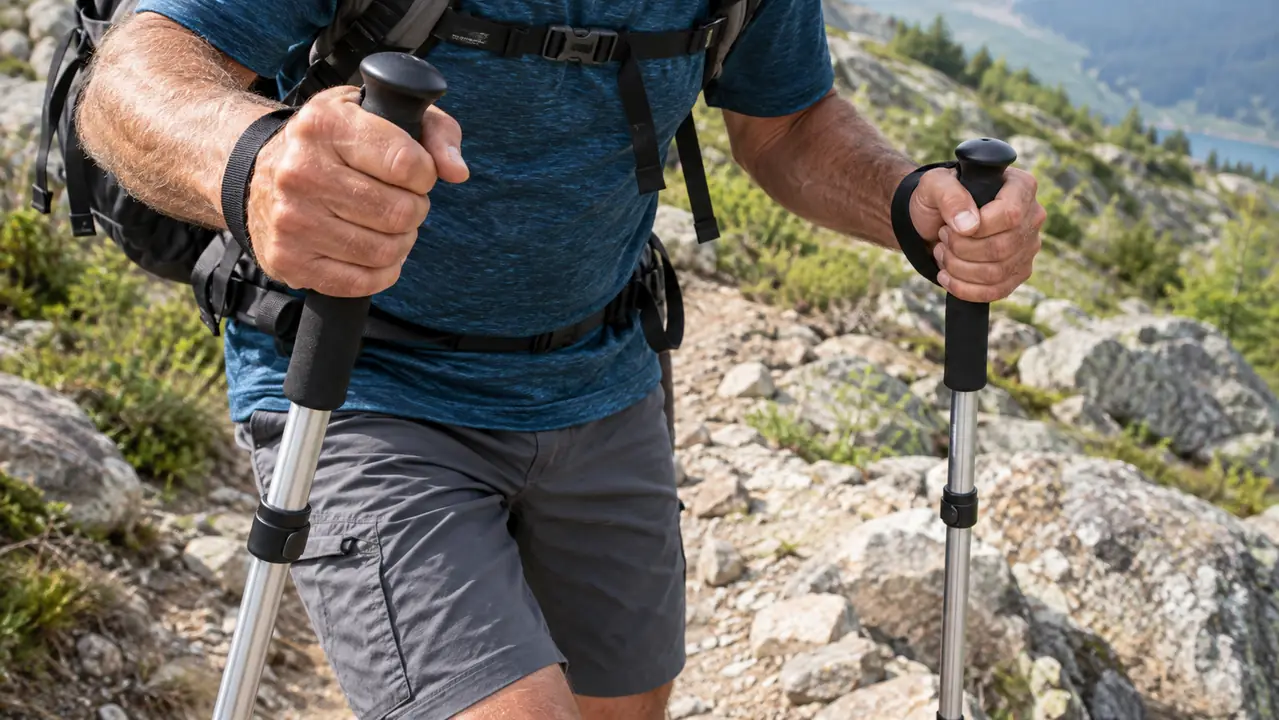
The poles I chose are the Cascade Mountain Tech lightweight aircraft-grade aluminum model with extended foam grips. They are not fancy. They are not the lightest poles you can buy. They are the poles I have now used on every weekend hike for the past season, including a 14-mile loop with 4,200 feet of elevation change, and they have changed the way I hike downhill.
What changed is simple. On the way down, I plant both poles a step ahead, shift weight through my arms, and let my upper body take some of the load. My left knee stops acting like the only shock absorber on the mountain. The extended foam grip matters here. I can choke up on the pole when the grade gets steep without my hand sliding down onto bare aluminum. That grip runs a long way down the shaft, so I always have a place to grab.
The first time I used them on a real descent, I noticed the difference in the first hundred yards. My arms were doing work my knee used to do. I had to slow down and find a rhythm, but once I did, the downhill felt less like a fight and more like a walk.
After a 14-mile loop in the Sawtooths, my left knee felt like it had done a flat walk. That had never happened before I started using Cascade Mountain Tech poles.
Ready to give your knees a break on the way down?
I have used these poles on loose scree, wet granite, and long switchbacks. They are simple, tough, and easy to adjust for height. If your knees are doing all the braking on descents, these are worth a look. Check today's price on Amazon and see if they fit your next hike.
Amazon Check Today's Price on Amazon →The first real test came on a trail in the Boise foothills after a wet spring. The mud had dried into a hard, rippled surface, the kind that grabs a boot and twists an ankle. With the poles, I kept my weight centered and my feet underneath me. I did not slip once. Mark, who had left his poles in the car, slid twice and spent the rest of the hike teasing me about my 'old lady sticks.' I did not care. My knee was fine.
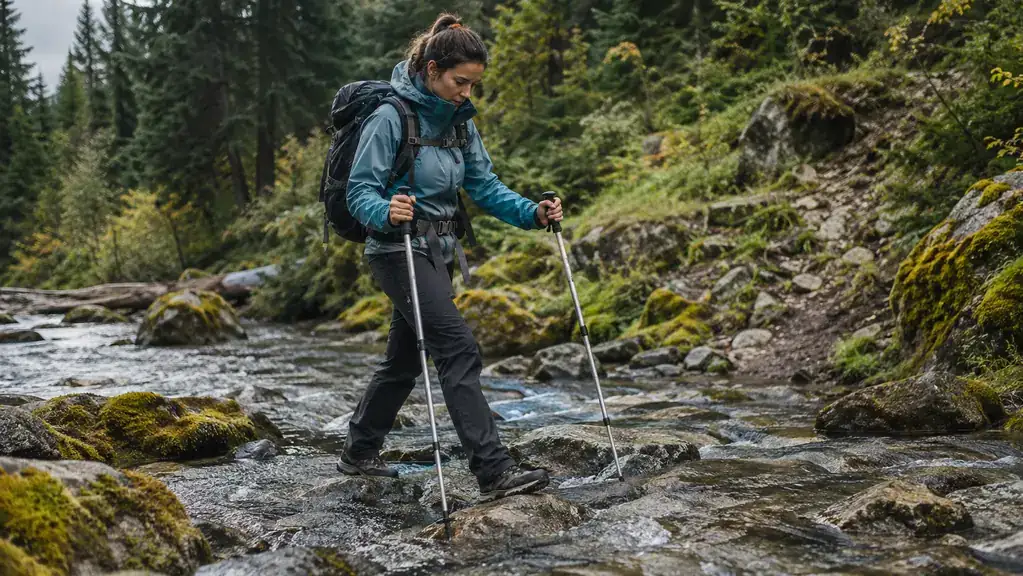
Since then I have used them on a 10-mile day in the Sawtooths with a long, exposed descent, on a snowy shoulder-season hike where the trail disappeared under drifts, and on a trip where I flew with the poles in one small checked duffel. That last part matters to me. The poles collapse down to a length that fits inside my suitcase, and they are light enough that I do not think twice about packing them. I can bring them without sacrificing space for other gear.
They are not perfect. The locking collars need a firm hand to open and close, and if you do not seat the sections just right, the pole will slowly collapse under load. I learned that on my second outing, when the lower section of the left pole slid down a few inches mid-hike. Once I got the hang of the locking sequence, it stopped happening. It is a minor quirk, not a dealbreaker.
The other thing I would note is that these are aluminum, not carbon. They are a little heavier than the premium sets, and on a long day you feel that extra weight in your arms. For me, the tradeoff is worth it. Aluminum bends before it breaks, and I would rather have a pole that survives being dropped on granite than one that saves me three ounces.
A note for anyone with joint trouble: I am a physical therapy assistant, and I would rather see a patient use poles than avoid hiking altogether. The poles do not fix the knee. They change the forces traveling through it. For me, that is enough.
What I'd Tell You If We Were Sitting at My Kitchen Table
If you are on the fence, here is my honest advice. Try a pair of trekking poles before you spend money on anything else in your hiking kit. They will do more for your knees on a steep descent than any shoe or insole I have seen in my clinic. And if you want a pair that works without emptying your wallet, the Cascade Mountain Tech poles are a solid place to start. They are not the fanciest poles on the trail. They are the ones I reach for every weekend, and the ones I pack when I fly. My left knee and I are both grateful.
My knee and I are sold. You?
If you hike steep trails, your knees are doing the braking. Give them a hand with a pair of Cascade Mountain Tech poles. Check today's price on Amazon and see if they are right for your next descent.
Amazon Check Today's Price on Amazon →