
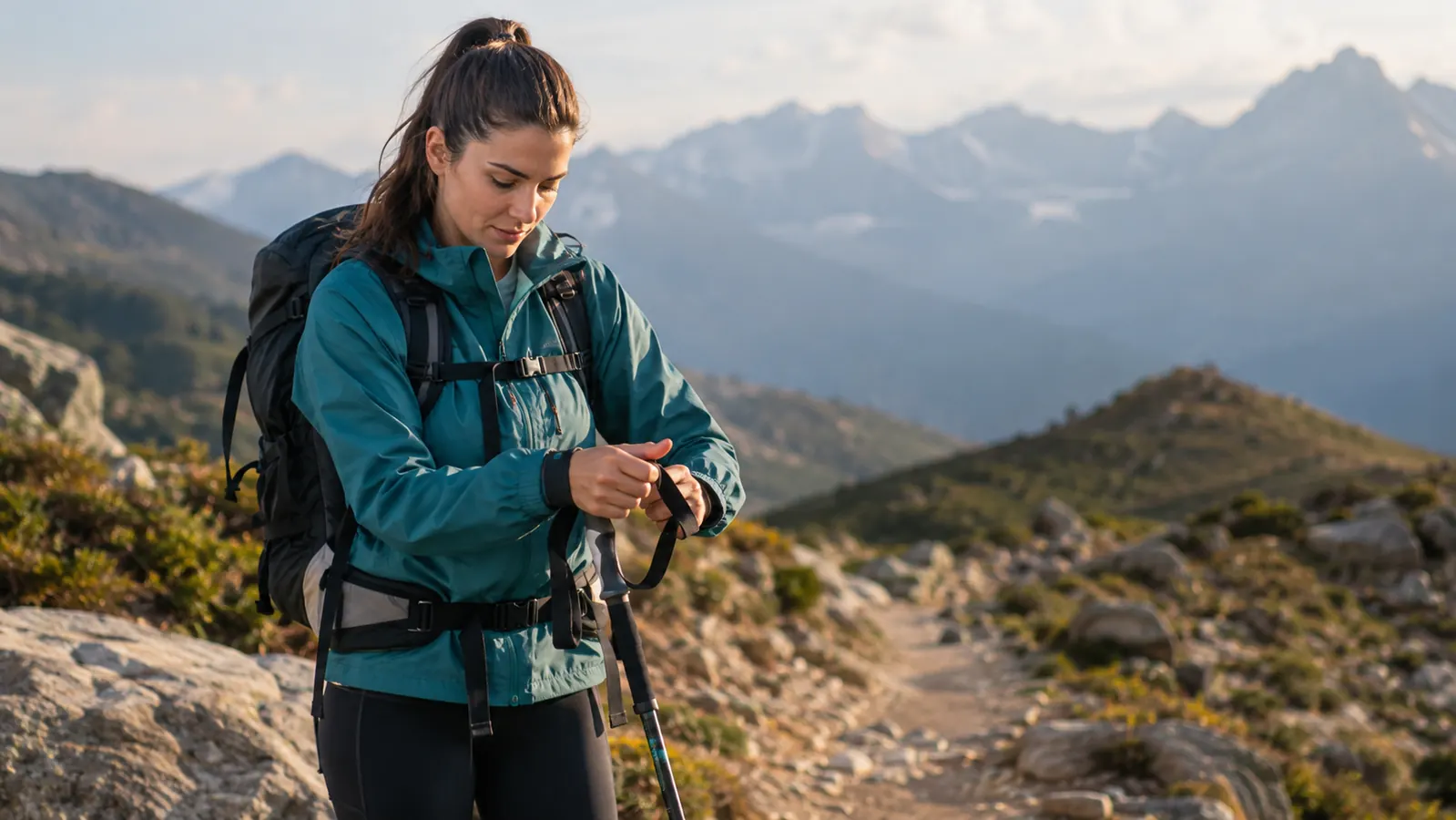
I have used the Cascade Mountain Tech Lightweight Aircraft-Grade Aluminum Trekking Poles on more than forty hikes this year, from weeknight loops in the Boise foothills to a nine-mile day in the Sawtooths. I have also spent time with carbon fiber poles, both Mark's and a couple of loaners from friends. The short answer is that most hikers should buy the Cascade Mountain Tech poles. Carbon fiber is lighter, no question. But the Cascade Mountain Tech poles are sturdier on rocky ground, easier to adjust with gloves on, and cost a fraction of what a comparable carbon pair runs. If you are counting grams for a thru-hike, read the carbon fiber section. If you are a normal weekend hiker, keep reading. I am a physical therapy assistant, so I spend my workdays thinking about joints and my weekends trying not to wreck mine. That background shapes every opinion in this comparison. I care less about the number on a scale and more about how a pole behaves when you need it.
The reason I am writing this comparison at all is that the choice looks simple on paper: lighter is better. On the trail it is not that clean. Weight matters, but so does what happens when you plant a pole hard between two rocks, or when a lock slips on a steep descent. I would rather carry an extra four ounces and trust the pole not to snap. That tradeoff is the whole story, and the rest of this article is the evidence.
| Cascade Mountain Tech | Carbon Fiber Poles | |
|---|---|---|
| Weight | About 15 ounces for the pair. You feel it only if you are weighing every piece of gear. | About 11 ounces for the pair. A real saving on a long carry. |
| Durability | Aluminum bends under a hard catch and keeps working. No splintering, no sudden failure. | Carbon fiber can crack or splinter if jammed hard between rocks. One bad plant can end a pole. |
| Vibration damping | Some buzz on hard-packed trail, easy to ignore through the foam grip. | Noticeably quieter and smoother on gravel and pavement. |
| Grip | Extended foam grip lets you choke down for steep climbs. Room for your whole hand. | Standard-length EVA grips. Fine, but less room to move. |
| Adjustability | Flip locks are easy to set and reset with gloves on. No guesswork. | Some carbon poles use twist locks that can slip under load. |
| Cost | Lower price, so a bent pole is annoying but not a disaster. | Higher price, and a cracked carbon shaft usually means a new pole. |
| Best for | Rocky trails, bushwhacking, everyday hikers who want one pair that lasts. | Ultralight backpackers who count every ounce and baby their gear. |
Where Cascade Mountain Tech Wins
Start with durability. I have dropped these poles, caught them between boulders, and used them to push through a snowfield in late June. The aluminum shafts have a few dings and one spot where the paint is scraped off, but they lock at the same height they did on day one. My friend's carbon poles look prettier in the gear closet, but he has already replaced one section after a hard plant on the John Muir Trail. That is the difference in one sentence: aluminum fails slowly and predictably, carbon fails fast and without warning.
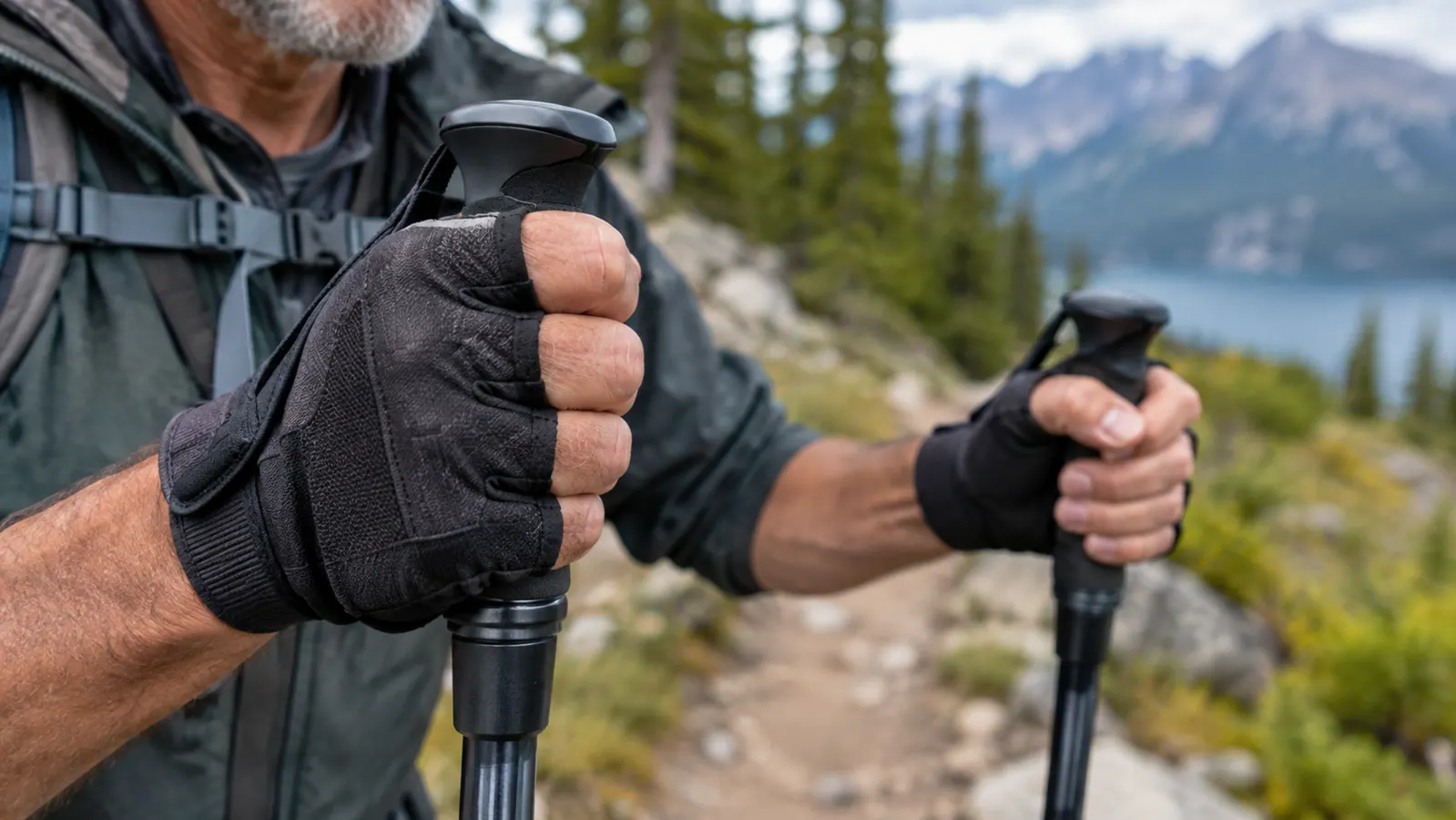
The extended foam grip is the feature I did not expect to care about. On steep climbs I choke down almost to the basket, and the extra foam makes that comfortable. The flip locks are also easier for me than twist locks. I have small hands and cold fingers, and a flip lock is a two-second adjustment. Twist locks on some carbon poles need a firm grip and a quarter turn, which is harder to do mid-hike. That alone has made the Cascade Mountain Tech poles the pair I grab first.
There is also the matter of confidence. When I am coming down a loose switchback with my left knee complaining, I do not want to worry about my equipment. The Cascade Mountain Tech poles feel solid under load. They flex a little, which is good, because a completely rigid pole transmits every shock straight into your wrists. The aluminum absorbs some of that energy instead of passing it along.
Where Carbon Fiber Wins
Carbon fiber wins the weight argument, and for some hikers that is the whole argument. A pair of carbon poles can be four to five ounces lighter than the Cascade Mountain Tech poles. On a twenty-mile day, that is weight you do not have to lift with every step. If you are trying to get your base weight down for a multi-day trip, those ounces add up. I understand that completely, because I have carried a loaded pack up switchbacks and felt every extra gram by mile fifteen.
Carbon fiber also feels better on hard surfaces. The material soaks up more of the vibration from pavement and packed gravel. On a long road walk or a smooth trail, carbon poles are genuinely more comfortable. They are also stiffer, which some hikers prefer for a positive plant on firm ground. That stiffness is a tradeoff, because it is what makes them more likely to crack on a sharp impact.
If you are the kind of hiker who never drops gear, never jams a pole between rocks, and keeps a careful inventory of every item, carbon fiber is a reasonable choice. The weight saving is real, and the smoother feel is real. I am not here to tell you carbon is bad. I am here to tell you it is a specialized tool for a specific kind of hiker.
Forty hikes in, the Cascade Mountain Tech poles have been dropped, jammed, and used to push through snow. They still lock at the same height.
Get the poles that have survived forty hikes
The Cascade Mountain Tech poles are the pair I reach for every weekend. They are not the lightest, but they are the ones I trust on rocky descents. Check today's price on Amazon and see why they are the sensible choice for most hikers.
Amazon Check Today's Price on Amazon →Who Should Buy Which
If you are an ultralight purist, or you are planning a thru-hike where every ounce matters, carbon fiber poles are worth the extra money. You will appreciate the lighter swing weight and the smoother feel on trail. If you are like me, a weekend hiker who wants one pair of poles that will survive rocky descents, careless packing, and the occasional drop, the Cascade Mountain Tech poles are the better choice. They are heavier, but they are also more forgiving.
There is a middle group too. If you hike mostly on smooth trails, carry a light pack, and have never broken a piece of gear, carbon fiber will probably serve you fine. But if you hike in the mountains, in the desert, or anywhere the trail fights back, I would take the aluminum poles every time. The extra four ounces is a small price to pay for not having to think about your poles.
How I Tested
I tested both types of poles on the same trails, back to back where I could. I did a four-mile loop in the Boise foothills one evening with the Cascade Mountain Tech poles, then the same loop the next evening with a pair of carbon poles. I paid attention to three things: how the locks held on steep sections, how much vibration came through the grips, and how the poles felt when I planted them hard on loose rock.
I also took the Cascade Mountain Tech poles on a nine-mile day in the Sawtooths with 2,300 feet of climbing and a long descent on talus. That is the kind of trail where a pole failure matters. The carbon poles I borrowed did not get that same test, because they belonged to a friend who was not willing to risk them on talus. That tells you something.
I am not a gear reviewer who spends an afternoon with a product and writes a verdict. I live with gear for months. The Cascade Mountain Tech poles have been in my car, on my porch, and on my back for most of a year. That is the perspective this comparison is written from.
What About the Locks?
A lot of people ask me about the locking mechanism, because a pole that slips is worse than a pole that is heavy. The Cascade Mountain Tech poles use flip locks. I have had them loosen once, on a hot day after a hard morning, and it took ten seconds to reset. The carbon poles I tried used twist locks, and one of them slipped twice on the same descent. That is not a universal truth about all carbon poles, but it matches what I have seen on the trail.
If you buy the Cascade Mountain Tech poles, check the locks before every hike. It takes two minutes. Do the same with any pole you buy. The mechanism matters more than the material.

Why I Keep Reaching for These Poles
Every time I pack for a hike, I grab the Cascade Mountain Tech poles without thinking. That is the real test. When gear works, you stop noticing it. These poles have become part of my routine. I slide them into the side pocket of my pack, I adjust the height at the trailhead, and I do not think about them again until the descent.
On the descent is where they earn their keep. My left knee needs help on long downhills, and the poles take a real share of the load. The extended foam grip means I can move my hand down for a lower angle without losing grip. The baskets keep the tips from sinking into soft ground. Those small details add up over a season.
I have owned expensive gear that failed at the worst moment. I have also owned cheap gear that was a waste of money. The Cascade Mountain Tech poles sit in the middle, and that is exactly where most hikers should be. They are not the best at any one thing, but they are very good at everything that matters.
The Numbers Behind the Choice
The Cascade Mountain Tech poles weigh about 15 ounces for the pair. A typical carbon pair weighs about 11 ounces. That is a four-ounce difference, roughly the weight of a smartphone. On a day hike, you will not notice it. On a thru-hike, you will.
The cost difference is larger. Carbon poles usually cost two to three times as much as aluminum poles. You are paying for the weight saving and for the material's vibration damping. Whether that is worth it depends entirely on how you hike.
What I'd Tell a Friend
If a friend asked me which poles to buy, I would ask one question first: how many miles a year do you hike? If the answer is more than a hundred, carbon fiber might be worth it for the weight and the feel. If the answer is a few weekend trips, the Cascade Mountain Tech poles are the obvious choice. Spend the money you save on gas to get to the trailhead.
And if that friend is hard on gear, I would not even ask the question. I would hand them the Cascade Mountain Tech poles and tell them to stop overthinking. A pole that survives the trail is more valuable than a pole that saves four ounces.
The Bottom Line
After forty hikes, the Cascade Mountain Tech poles are still my daily pair. They are not the lightest, and they are not the most elegant. They are the ones I trust. For most hikers, that trust matters more than a few ounces on the scale.
Carbon fiber is a real upgrade for ultralight backpackers who are willing to handle their gear with care. For everyone else, the Cascade Mountain Tech poles do the job, take the abuse, and leave money in your pack budget. That is the comparison in one sentence.
More Reading
I have written a longer-term review of the Cascade Mountain Tech poles on this site, and I also put together a list of reasons trekking poles save your knees on descents. Both go into more detail if you want to dig deeper before you buy.
Buy the poles that do the job, not the ones that look good in a gear closet
If you want one pair of trekking poles that will handle real trails and real mistakes, the Cascade Mountain Tech poles are the ones. Check today's price on Amazon.
Amazon Check Today's Price on Amazon →